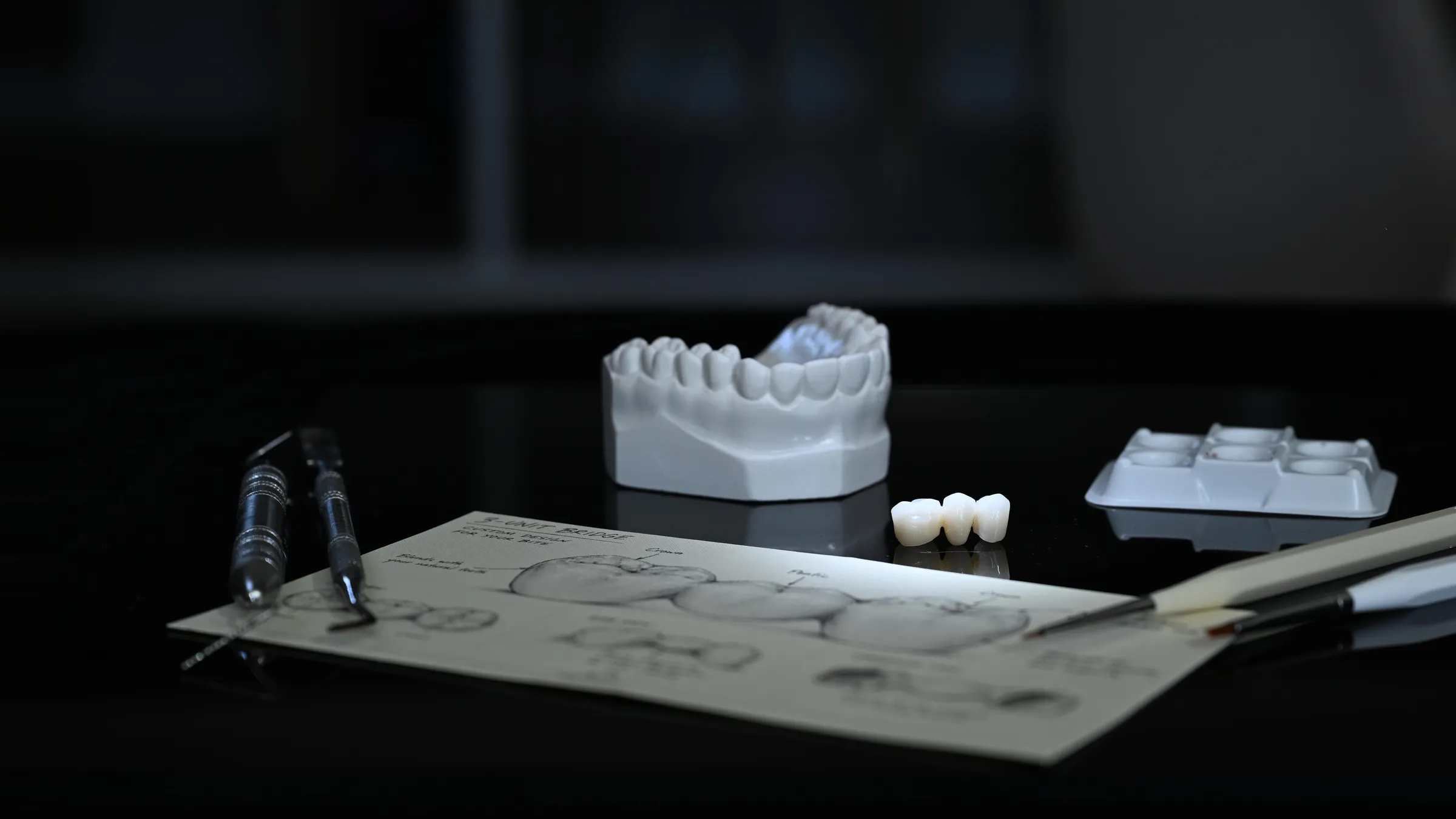
Dental Bridge
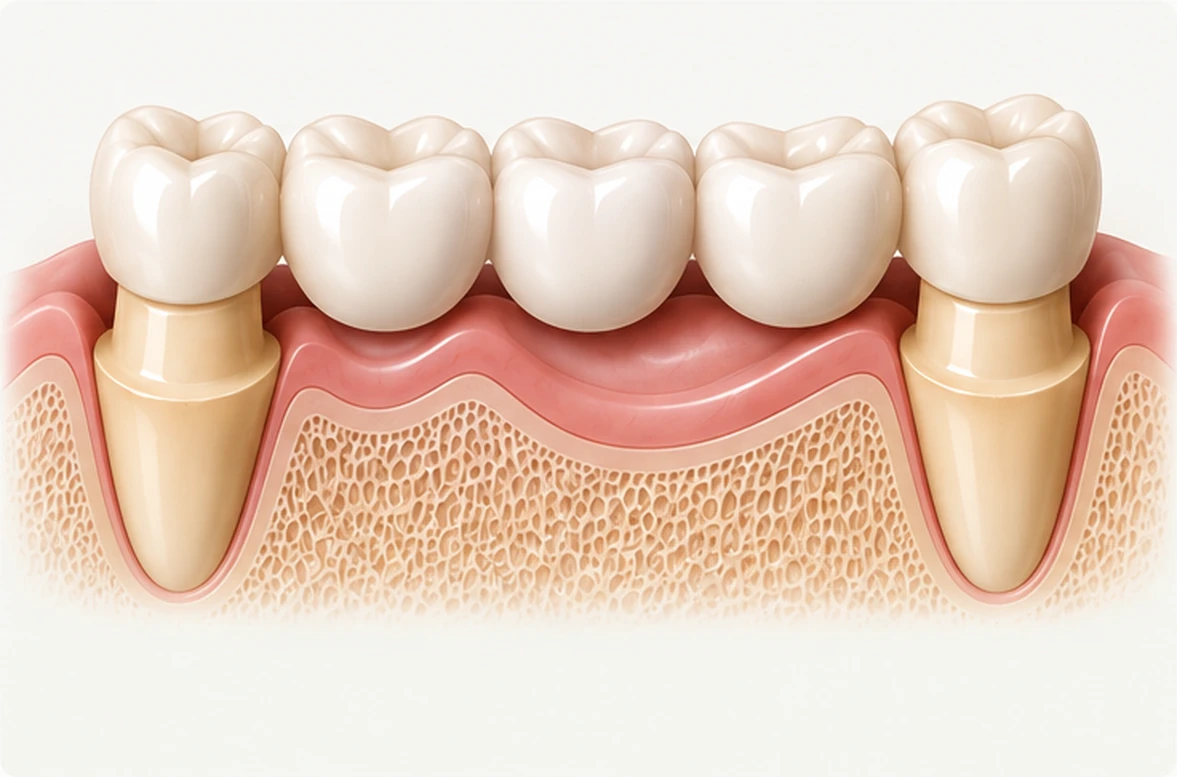
Uses the neighboring teeth for support.
- No surgery
- Uses adjacent teeth for support
- Natural-looking results
- Completed in weeks
Restorative Dentistry · Venice Island · Bridge Dentist Venice FL
The decision you didn’t know you had to make.
A missing tooth is a three-way clinical choice: a fixed dental bridge, a dental implant, or doing nothing. Each path has different clinical logic, timeline, and cost. At Smile Spot Dentistry in Venice, Florida, Dr. Sellappan will give you a clear clinical answer on which permanent tooth replacement is right for your anatomy and your life — not which one is most profitable.
A dental bridge replaces a missing tooth with a natural-looking, all-ceramic restoration — restoring your smile, bite and long-term oral health.
01
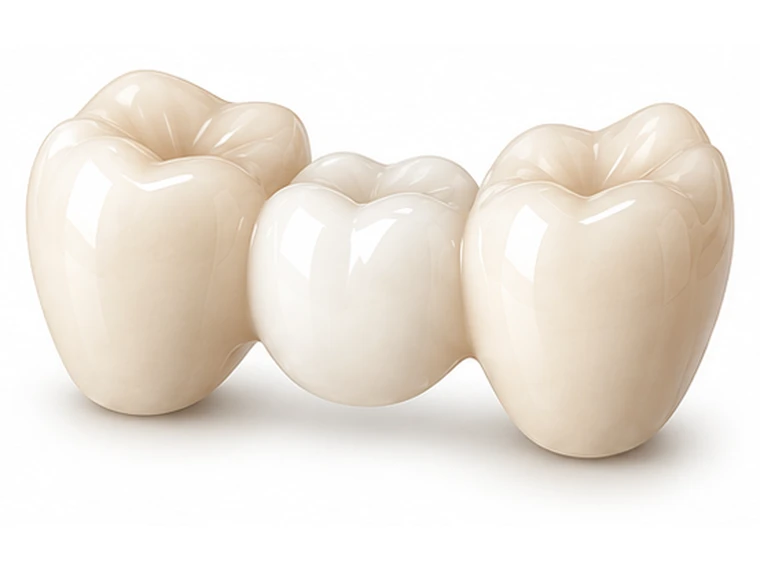
Fills the gap with a natural-looking, all-ceramic tooth that blends with your surrounding teeth.
02
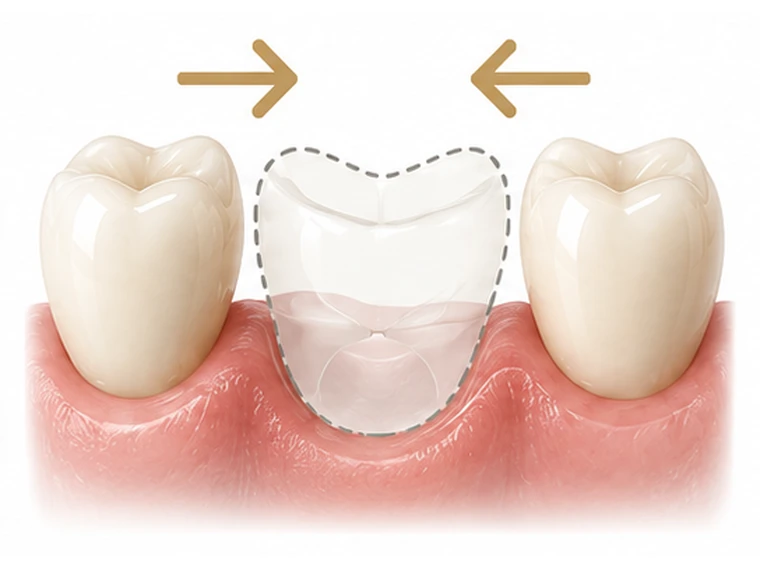
Prevents adjacent teeth from tipping, opposing teeth from over-erupting and bite changes that can lead to bigger problems.
03
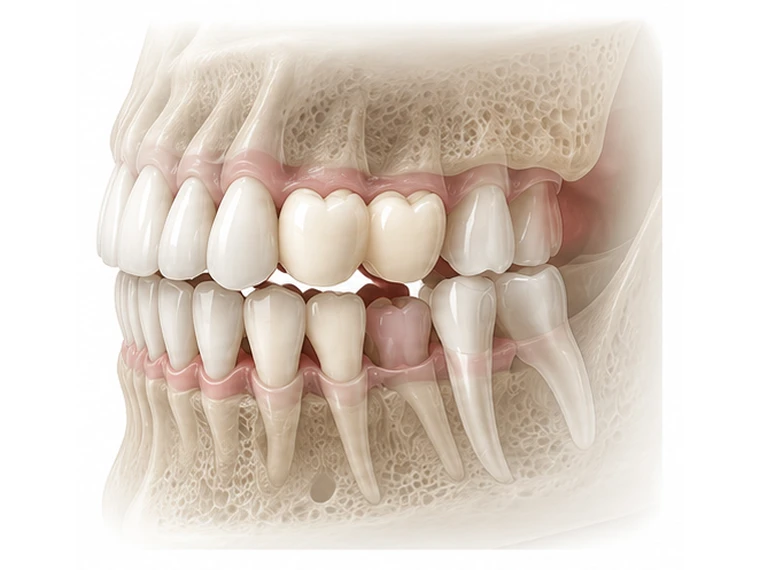
Supports proper chewing, protects the jawbone and helps maintain the overall function of your smile.
04
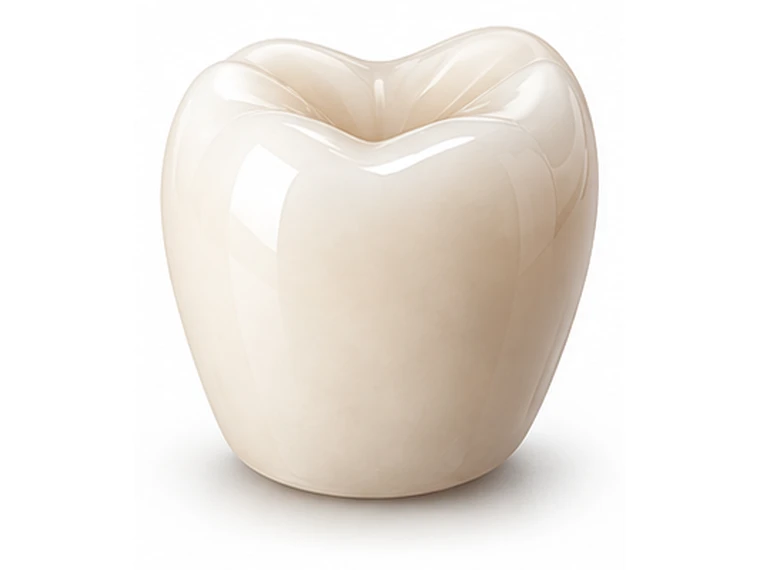
We use advanced digital planning, high-quality ceramics and Kois principles to create a bridge that looks natural and functions for the long term.
2 · Appointments · No Surgery
iTero digital scan to seated fixed bridge — 2–3 weeks total. No incisions, no open trays, no putty.
100% · Metal-Free · All-Ceramic
IPS E.max and monolithic zirconia. Zero metal core, zero dark gum margins, zero biological incompatibility.
Kois · Occlusal Force Analysis
Every bridge occlusal-mapped before preparation. Abutment roots load-tested digitally. CAD/CAM milled precision.
Neither option is automatically better. The condition of the neighboring teeth, available bone, bite forces, medical considerations and your treatment goals determine which approach makes more sense.
Uses the neighboring teeth for support.
A standalone replacement that preserves bone.
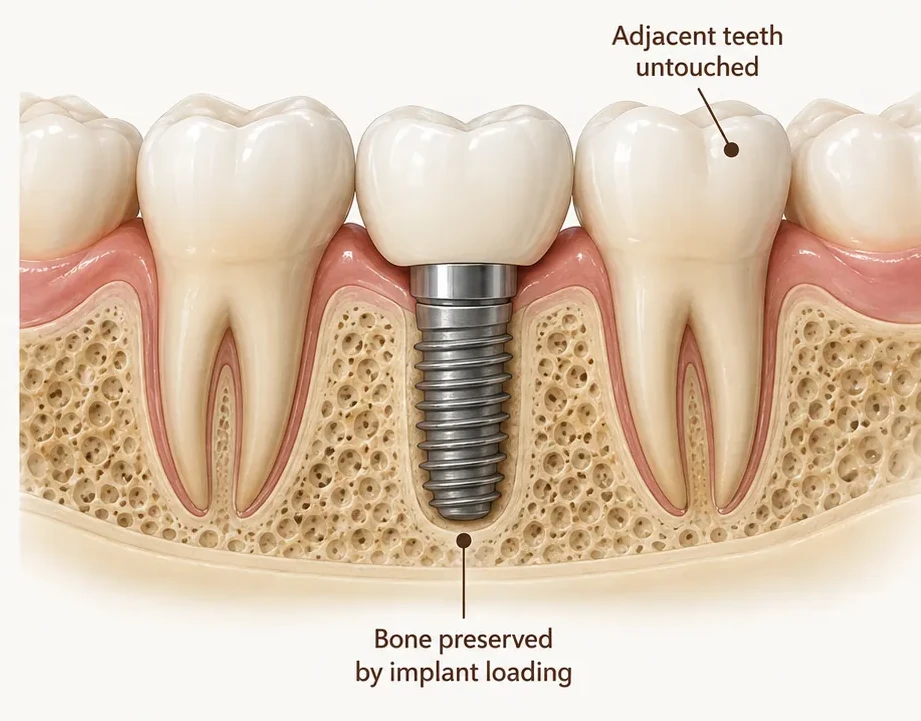
Different situations. The right solution.
| Consideration | Dental Bridge | Dental Implant |
|---|---|---|
| Treatment timeline | 2–3 weeks total. Two appointments. Faster permanent tooth replacement. | 3–6 months total. Surgery + osseointegration healing period required. |
| Surgery required | No surgery. No incision, no implant post, no bone healing required. | Yes — a titanium post is surgically placed into the jawbone under local anesthetic. |
| Bone volume needed | None required. Tooth-supported bridge does not depend on implant-site bone volume. | Adequate bone volume required. Insufficient bone may require grafting — adding cost and 4–6 months. |
| Adjacent teeth | Prepared and crowned. Ideal when neighboring teeth already need crowns. | Remain untouched. No preparation of healthy adjacent teeth required. |
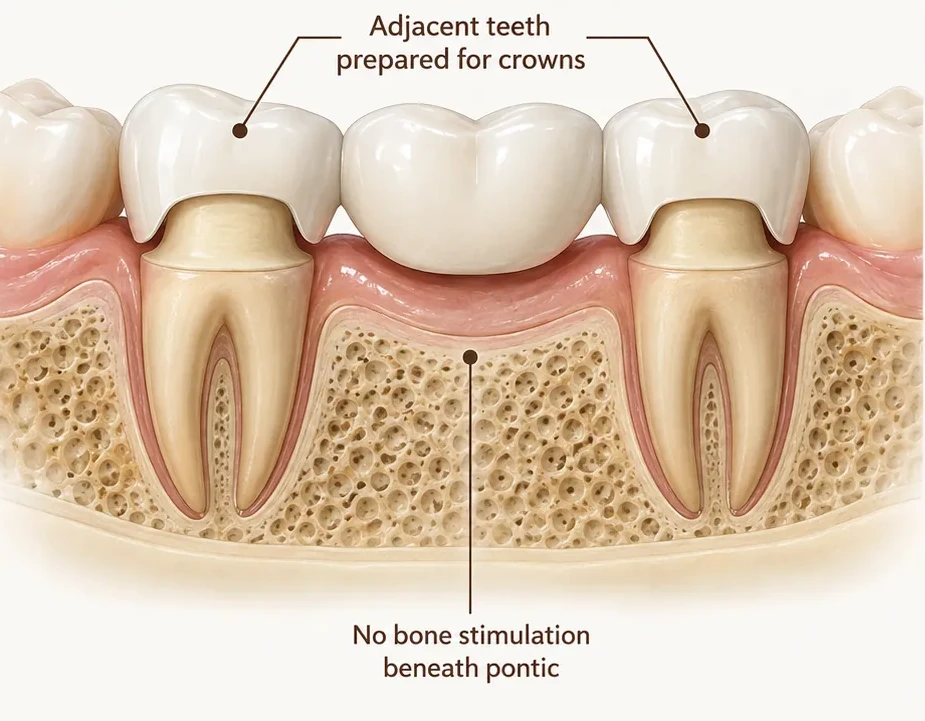
| Bone preservation | Does not prevent bone loss at the gap site. Bone resorption continues under the pontic over time. | Preserves bone. The implant stimulates the jawbone, halting resorption at the site. |
| Daily hygiene | Floss threaders or water flosser required under the pontic. More involved hygiene routine. | Brushed and flossed like a natural tooth — no special technique required. |
| Relative cost | Generally lower upfront. Usually $2,500–$5,000 out-of-pocket. CareCredit and Cherry financing available. Many PPO plans provide benefits for major restorative treatment, typically around 50%; coverage varies by plan. | Generally higher upfront. Typically $3,500–$6,000+ per tooth. Insurance rarely covers implant surgery. Financing options available. |
| Best clinical situation | Adjacent teeth are already compromised and need crowns, or to address multiple clinical needs together. | Adjacent teeth are healthy and bone conditions permit implant treatment. Where several adjacent teeth are missing, an implant-supported bridge uses implant posts as anchors instead of overloading a single natural tooth. |
| Long-term durability | Often 10–15 years or longer with proper hygiene and occlusal stability. Modern zirconia bridges generally offer advantages over traditional PFM restorations. | Can last decades with proper care. The implant post does not decay or fracture with normal function. |
| Medical considerations | Suitable for most patients. Certain medications such as bisphosphonates (Fosamax, Prolia, Reclast), blood thinners, poorly controlled diabetes, previous radiation to the jaw, or a preference to avoid surgery may make a bridge the better option. | Certain medications and systemic conditions can affect implant candidacy and osseointegration. A thorough medical history and evaluation are required. |
If the neighboring teeth already need crowns, a fixed dental bridge can address the missing tooth and compromised adjacent teeth together. If the neighboring teeth are healthy and bone volume is adequate, an implant can replace the missing tooth without preparing intact enamel. More complex cases involving multiple failing teeth, bite collapse or extensive bone loss may require a full mouth reconstruction.
Clinical Decision Guide
The specific clinical scenarios where a fixed dental bridge is the appropriate — sometimes superior — solution for missing tooth replacement. And where an implant clearly wins.
The Clinical Decision
Most patients arrive assuming implants are always superior. The clinical reality is more nuanced. There are legitimate scenarios where an all-ceramic dental bridge is the smarter, more appropriate clinical choice for missing tooth replacement — and we'll tell you which one applies to your anatomy. Both fixed bridges and dental implants are provided in-house at our Venice, FL boutique dental studio.
| Dental Bridge | Dental Implant | |
|---|---|---|
| Treatment Timeline | 2–3 weeks total. Two appointments. No surgery. Faster permanent tooth replacement. | 3–6 months total. Surgery + osseointegration healing period required. |
| Surgery Required | No surgeryNo incision, no implant post, no bone healing required. | Yes — a titanium post is surgically placed into the jawbone under local anesthetic. |
| Bone Volume Needed | None requiredTooth-supported bridge anchors to adjacent teeth — bone loss at gap site does not affect candidacy. | Adequate bone volume required. Insufficient bone may require grafting — adding cost and 4–6 months. |
| Adjacent Teeth | Crown-supported bridge: abutment teeth are prepared and crowned — ideal when those teeth already need crowns. | Adjacent teeth untouchedNo preparation of neighboring healthy teeth required. |
| Bone Preservation | Does not prevent bone loss at the gap site — bone resorption continues under the pontic over years. | Preserves boneThe implant post stimulates the jaw bone, halting resorption at the site. |
| Dental Bridge Cost | Lower upfrontPPO plans typically cover 50%. Usually $2,500–$5,000 out-of-pocket. CareCredit and Cherry financing available. | Higher upfront cost. Insurance rarely covers implant surgery. Full out-of-pocket typically $3,500–$6,000+ per tooth. |
| Medical Considerations | No restrictionsSuitable for patients on bisphosphonates (Fosamax, Prolia, Reclast), blood thinners, or those avoiding surgery. | Certain medications and systemic conditions can affect implant candidacy and osseointegration. |
| Long-term Maintenance | Floss threaders or water flosser required under the pontic. More involved hygiene routine. | Brushed and flossed exactly like a natural tooth — no special technique required. |
| Bridge Durability | 15–20+ years with proper hygiene and occlusal stability management. Zirconia bridge outperforms PFM long-term. | Lifetime with proper care — the implant post does not decay or fracture. |
Dr. Sellappan's clinical position: When adjacent teeth are already compromised and need crowns anyway, a fixed dental bridge is often the superior clinical choice — you're addressing two clinical needs simultaneously without additional tooth reduction penalty. When the neighboring teeth are pristine and bone volume is adequate, an implant avoids touching healthy enamel and is likely the better long-term investment. For patients whose situation involves multiple failing teeth, bite collapse, or complex occlusal factors, the answer may be full mouth reconstruction rather than a single bridge or implant. We will never recommend the more expensive option simply because it exists.
There’s no single type of bridge for every case. We choose the design that best fits your clinical needs and long-term goals.
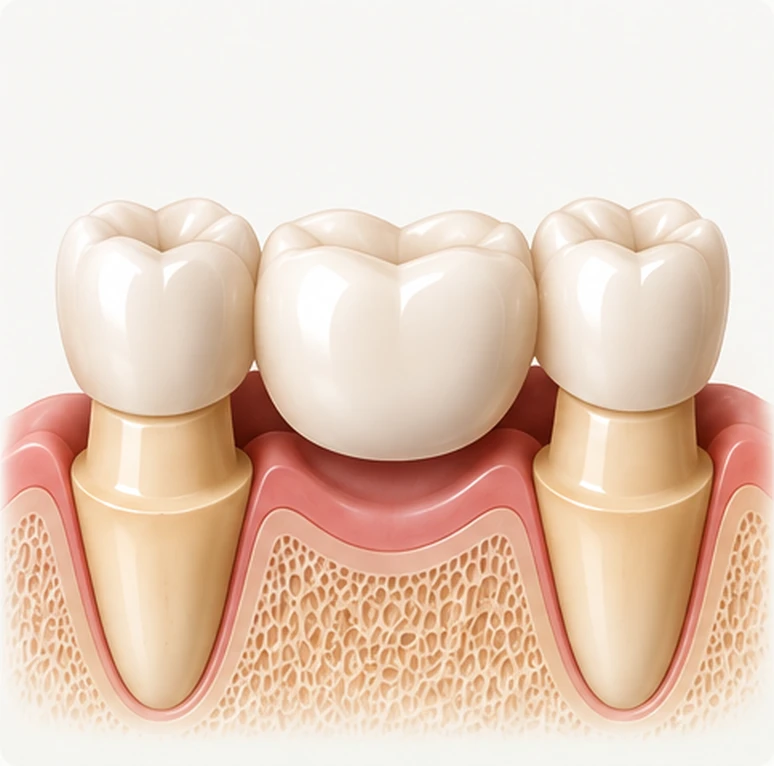
Tooth-supported · Most common
A three-unit restoration supported by crowns on the adjacent teeth. Ideal when the neighboring teeth already need crowns.
Best when:Adjacent teeth already need restorative treatment.
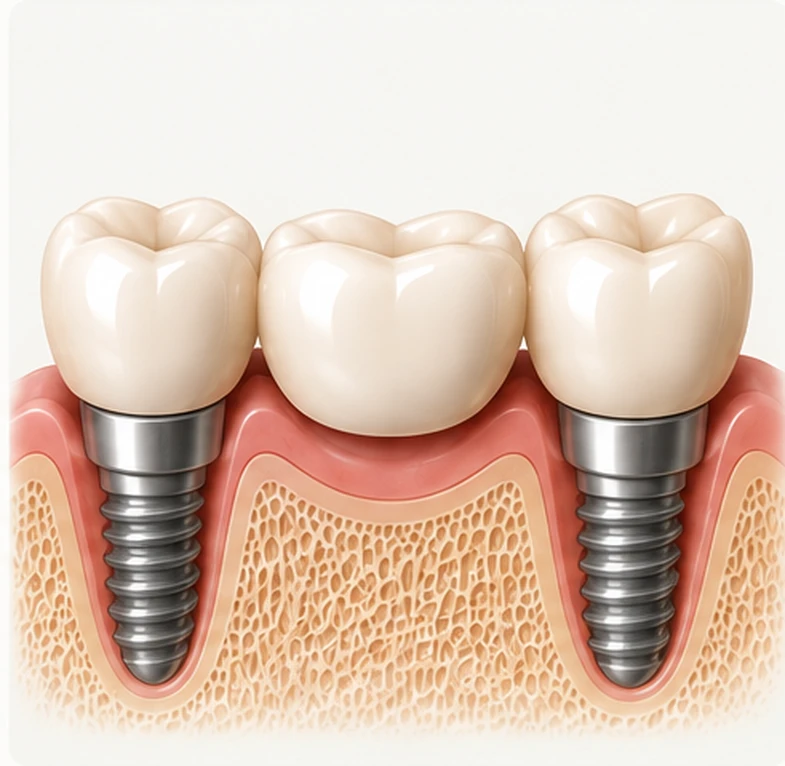
Implant-supported · Multiple missing teeth
Two or more implants support a fixed span without relying on neighboring natural teeth. A good option for consecutive missing teeth when bone volume is adequate.
Best when:Multiple missing teeth and adequate bone volume.
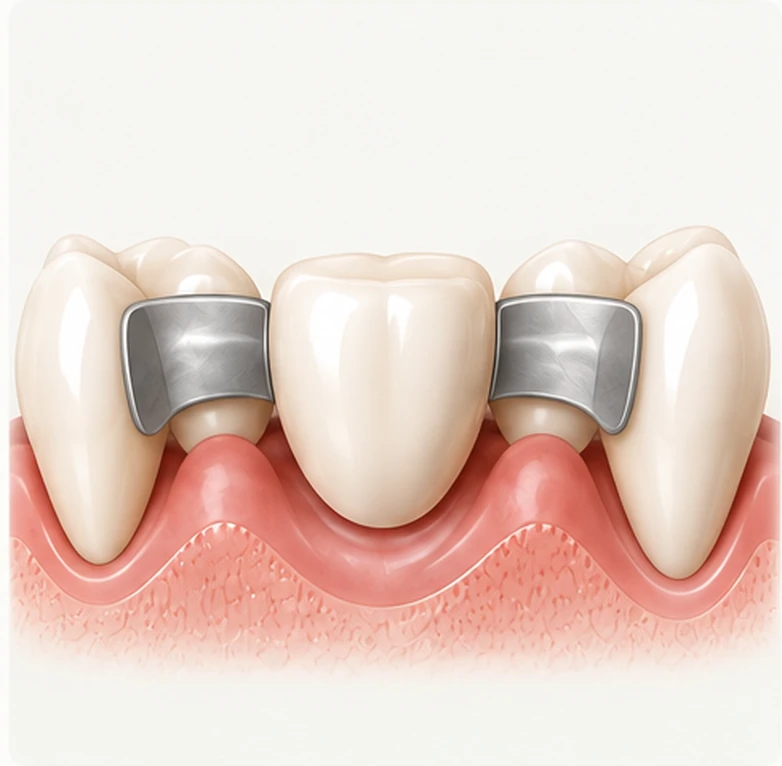
Conservative · Primarily anterior
A pontic bonded to the lingual surfaces of neighboring teeth, preserving more natural enamel. Used primarily for single missing front teeth where bite forces permit.
Best when:Single missing front tooth and appropriate bite forces.
Multiple missing teeth · More engineering
Used to replace several missing teeth in a row. Longer spans require careful planning of support, flexure, bite forces, connector geometry and material selection. Longer spans are usually made in monolithic zirconia for strength; E.max is limited to shorter spans.
Best when:Multiple missing teeth with proper support and bite analysis.
Bridge Architecture
Not every missing tooth calls for the same solution. Bridge type is determined by the number of missing teeth, the condition of adjacent teeth, bone volume, and the patient's clinical history.
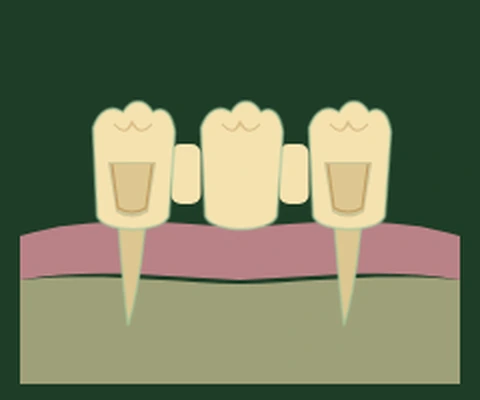
Three-unit all-ceramic restoration anchored to crowns prepared on adjacent natural teeth. The conventional fixed bridge is the gold standard approach when adjacent teeth require restorative work. Digitally verified with iTero scanning to ensure passive fit and precise adaptation. Ovate pontic design for natural gum emergence and long-term gum support.
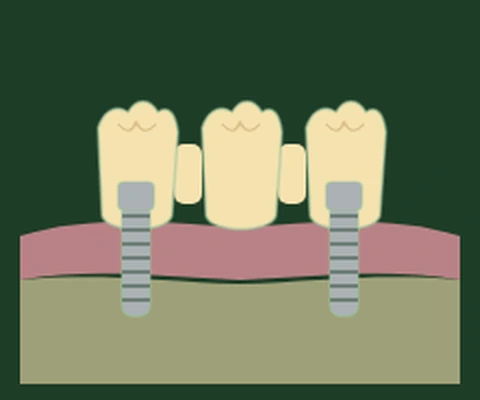
Two implant posts anchor the ceramic span across two or more missing teeth — no adjacent natural teeth involved. This implant bridge option preserves bone, delivers natural force transfer through the implants, and avoids involving healthy enamel. The most appropriate solution when multiple consecutive teeth are missing and bone volume is adequate.
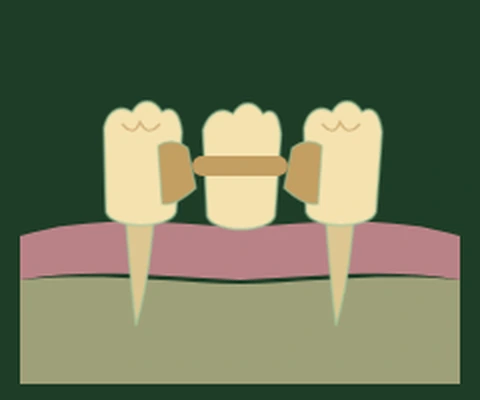
All-ceramic wings bond adhesively to the lingual surfaces of adjacent teeth — zero crown preparation, zero drilling of adjacent enamel. This minimally invasive cantilever dental bridge variant is reserved for anterior single missing tooth cases where bite forces permit this conservative design. Not appropriate for posterior regions where bite force would debond the wings.
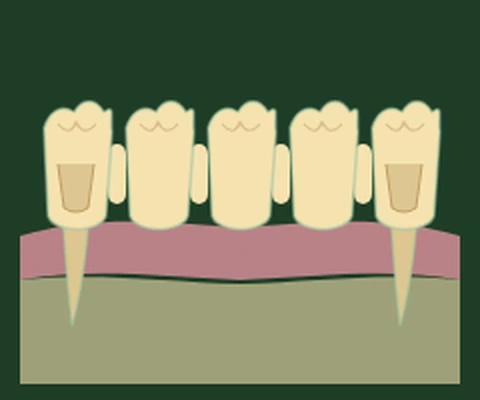
Multi-unit spans require additional engineering before construction. Longer bridge spans require additional engineering to control flexing, balance bite forces, and protect the supporting teeth or implants over time. A titanium implant framework is preferable for long spans. Full Kois bite analysis and occlusal equilibration planning is mandatory for any span beyond three units.
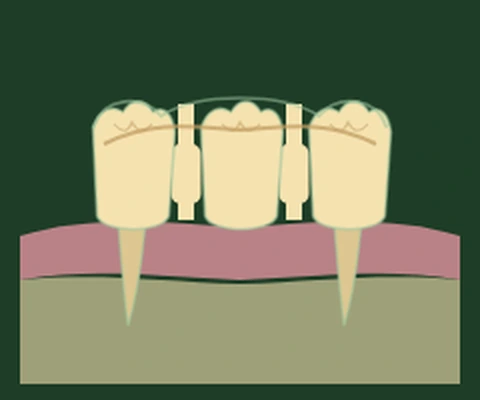
Digitally designed monolithic zirconia bridges combine exceptional strength with natural translucency — eliminating visible metal margins entirely. Modern CAD/CAM milling produces precise fit, smoother contours, and highly durable full-contour restorations suited to posterior and full-arch applications. Where older porcelain-fused-to-metal bridges developed dark lines at the gumline over time, a monolithic zirconia bridge maintains its aesthetic integrity for decades.
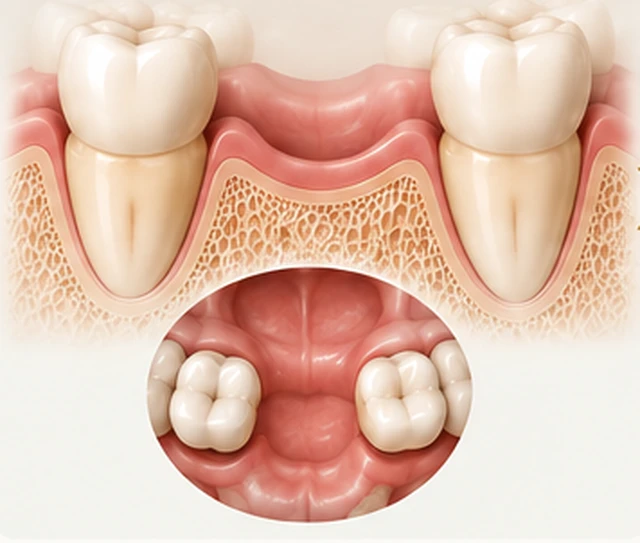
A missing tooth affects more than the space you see. Without normal contact and support, neighboring teeth can tip toward the opening, the opposing tooth can over-erupt, and bone at the missing-tooth site can gradually resorb. Over time, a straightforward missing-tooth replacement can become a more complex restorative problem.
Weeks to months
Without a tooth to bite against, the opposing tooth can begin to over-erupt into the empty space. At the same time, bone at the missing-tooth site begins to remodel because the natural root is no longer present.
Months to years
The teeth beside the gap lose normal contact support and can gradually tilt or rotate toward the opening. Contacts change, food traps can develop, and the available space for a future restoration can become smaller.
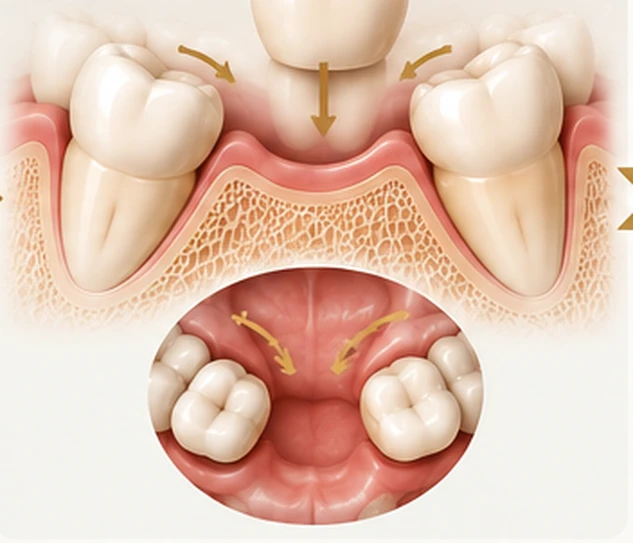
Over time
As teeth move, the original occlusal relationship changes. Forces may no longer be distributed the same way across the arch, making restoration more complicated than simply replacing the missing tooth.
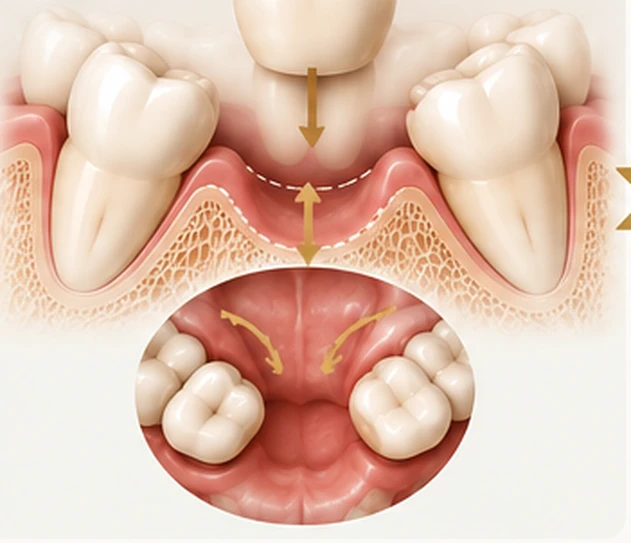
The longer-term consequence
Significant tooth movement and ridge changes may mean that orthodontic correction, bone grafting, bite management or treatment of additional teeth is needed before a bridge or implant can be placed.
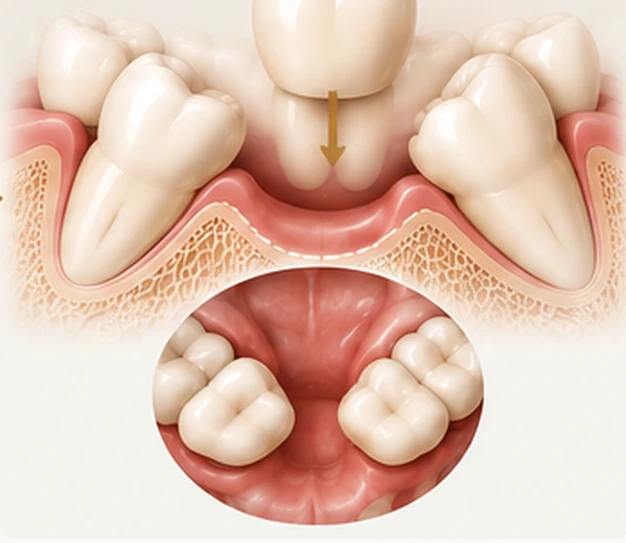

What Happens if Missing Teeth Are Not Replaced
The most underestimated argument for bridge or implant treatment: what the neighboring teeth do when you leave the gap empty.
Teeth are not stable structures in empty space. Every tooth is held in position by contact pressure from its neighbors and its opposing counterpart. Remove one tooth and the system becomes unbalanced — immediately, silently, and progressively. The clinical term is Pathological Migration, and it is one of the most common causes of complex restorative work that patients at our Venice, FL dental practice never anticipated. It begins within weeks. Over years, it restructures the entire bite — and what began as a simple missing tooth gap may ultimately require comprehensive full mouth reconstruction to correct. A fixed dental bridge or implant placed promptly helps prevent this cascade.
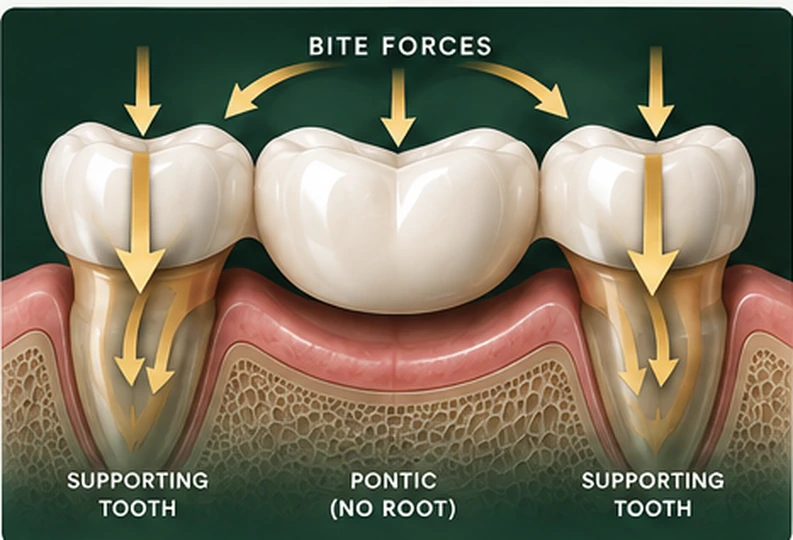
A bridge is different from a single crown because the replacement tooth has no natural root of its own. Bite forces have to travel through the bridge and into its supporting teeth or implants. That makes planning, fit and design especially important. At Smile Spot Dentistry in Venice, FL, bridge design begins with the supporting teeth and bite — not simply the ceramic selected.
The Load
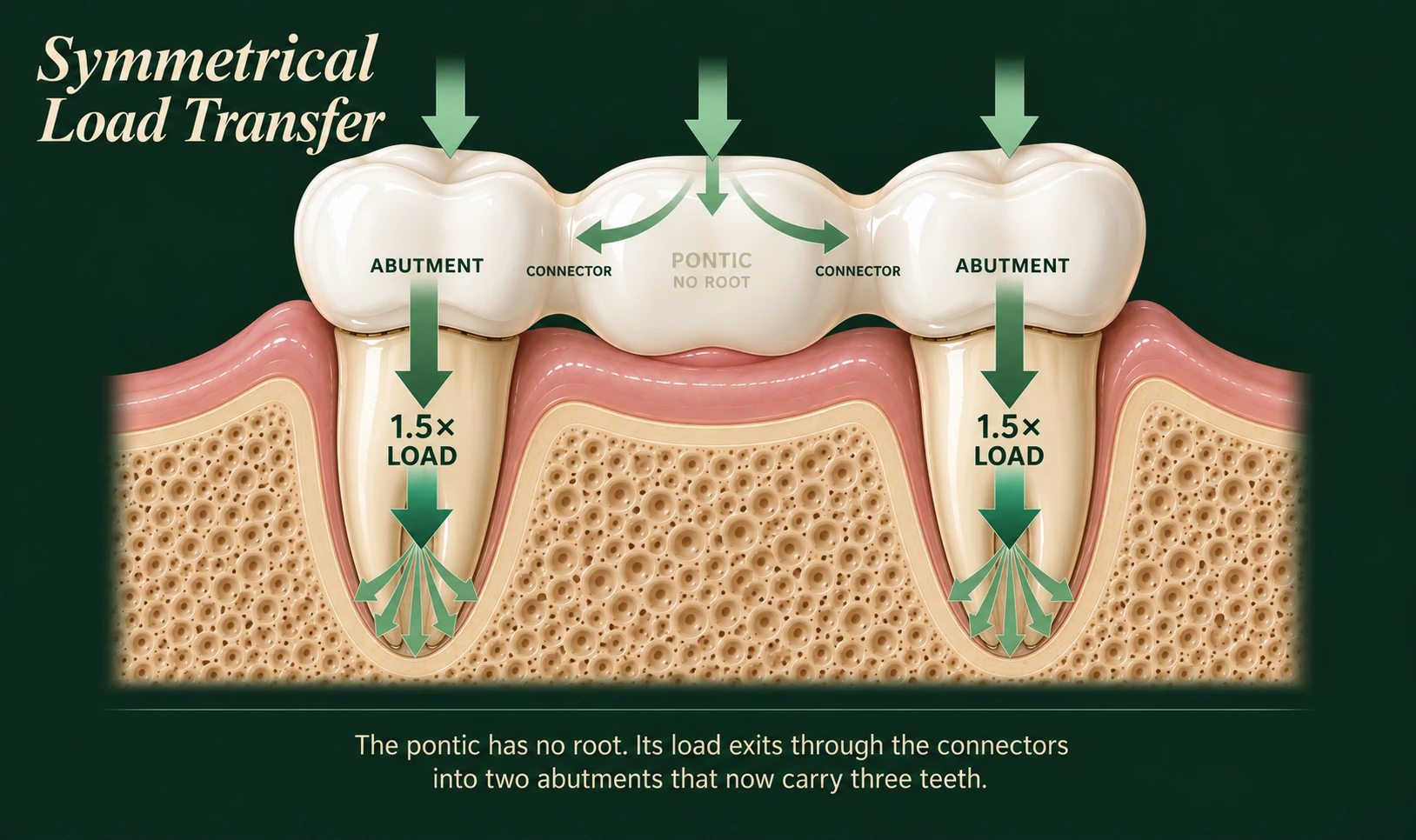
In a three-unit fixed dental bridge, the pontic has no root of its own. Occlusal forces transfer through the connectors into the supporting abutment teeth. Before preparation, Dr. Sellappan uses Kois occlusal analysis to evaluate root anatomy, bone support, periodontal health, previous root canal treatment, bite forces and whether each abutment can predictably carry the additional load.
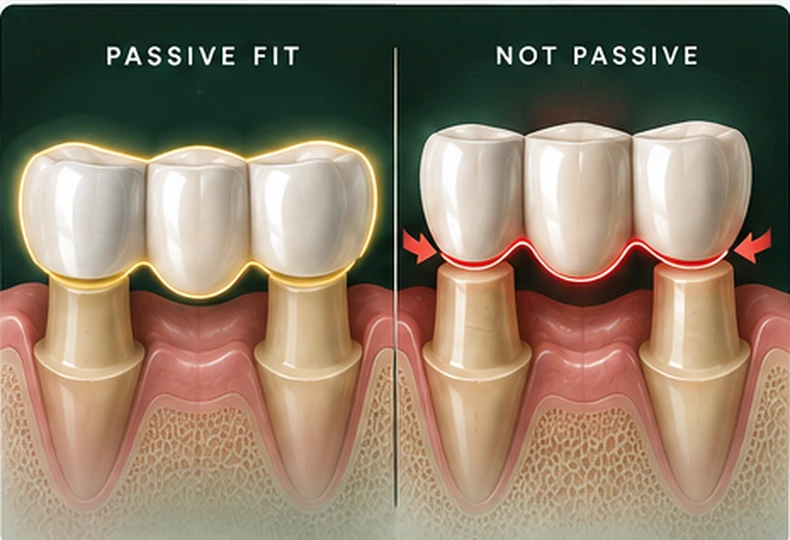
The Fit
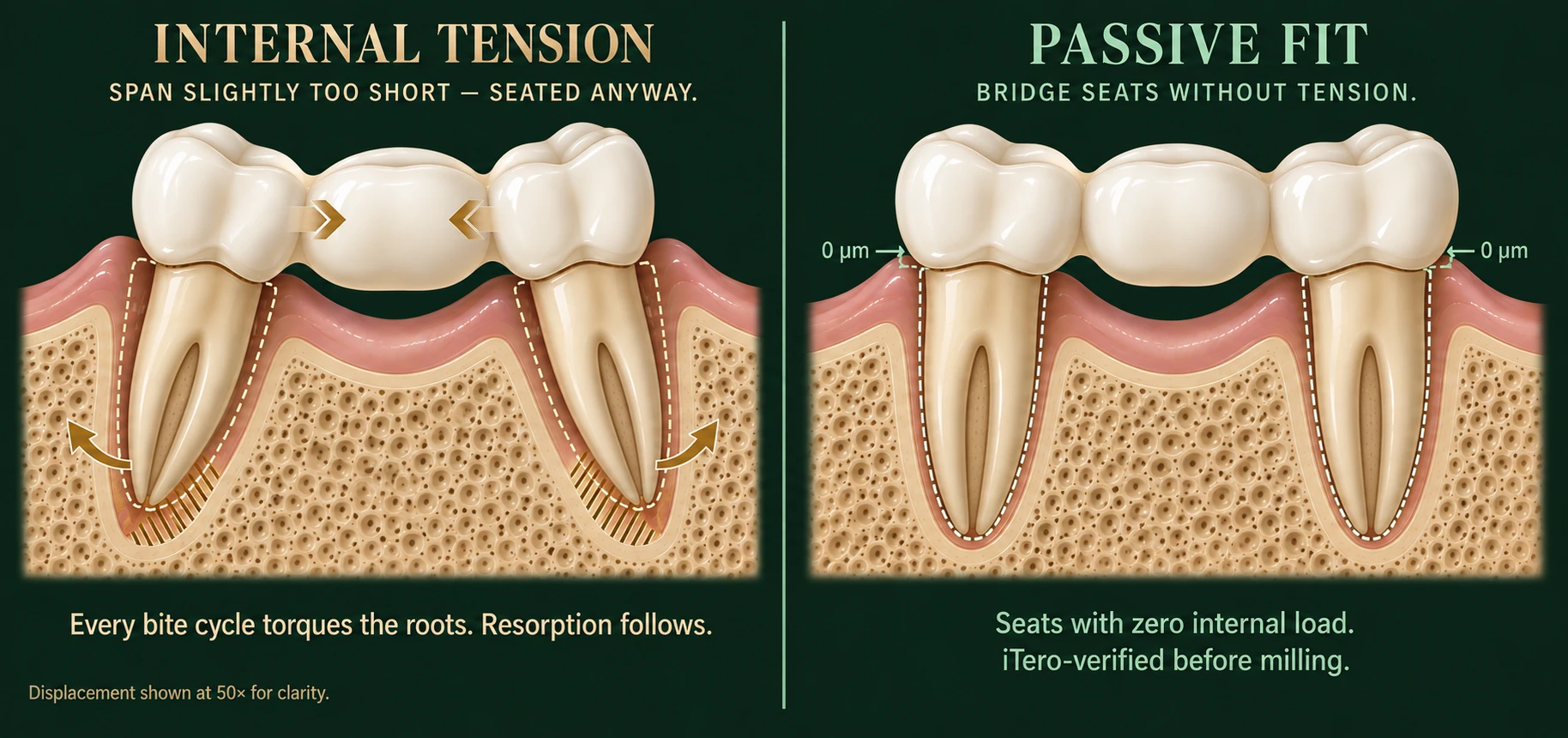
Passive fit means the bridge seats without unwanted internal tension, which can transmit lateral forces and torque to the supporting roots. Our iTero digital workflow and CAD/CAM fabrication help create precise adaptation, followed by clinical fit and occlusal verification before final seating.
The Design
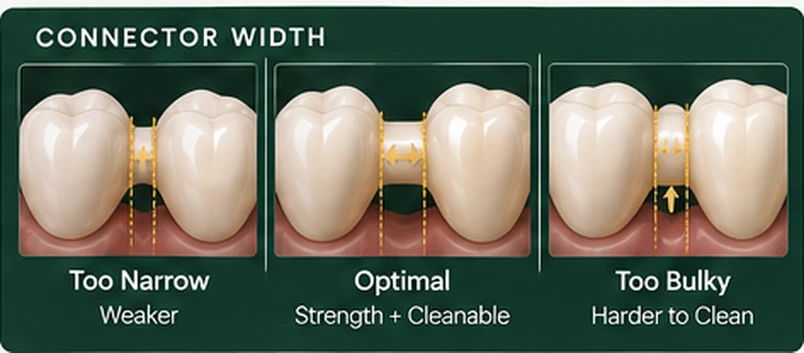
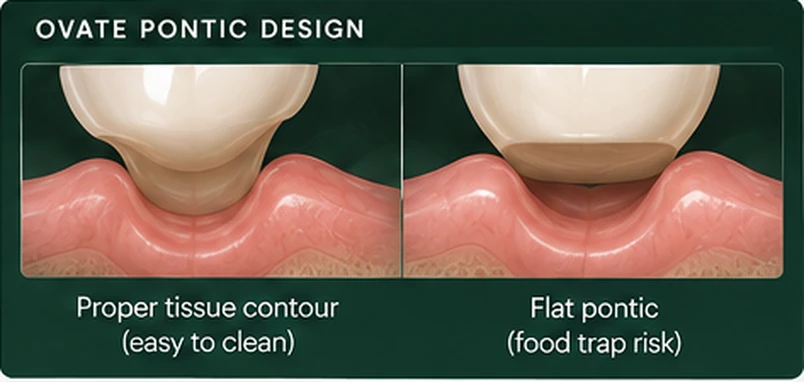
Connector width is planned according to span length, ceramic material — monolithic zirconia or layered ceramic — and bite force. The pontic is also shaped to create a natural emergence profile while allowing effective plaque control and hygiene access beneath the bridge. An ovate pontic can help the replacement tooth appear to emerge naturally from the gum tissue.
Bridges Engineered Around Bite Function
"A bridge is not a gap filler. It is a load-bearing structure spanning two root systems that were never designed to carry a third tooth's worth of occlusal force. The engineering decisions made at the planning stage — abutment selection, connector width, passive fit — determine whether that bridge survives 5 years or 25."
Before any preparation begins, we analyze whether the anchor teeth can support the combined force of three teeth. An abutment with compromised bone support, prior endodontic therapy, or a narrow root may not be an appropriate anchor regardless of how the crown looks. Kois occlusal design and functional dentistry protocols quantify this before the drill starts. Implant biomechanics are evaluated as an alternative where abutment capacity is borderline.
A bridge that seats with internal tension is a bridge under constant stress. Even microscopic tension — invisible to the naked eye — applies lateral torque to the abutment roots with every bite cycle. Over years, this manifests as root resorption, loosening, or bone loss. Our milled bridge is designed from an iTero scan to minimise internal tension: the passive fit standard that determines bridge longevity over time.
Schematic A
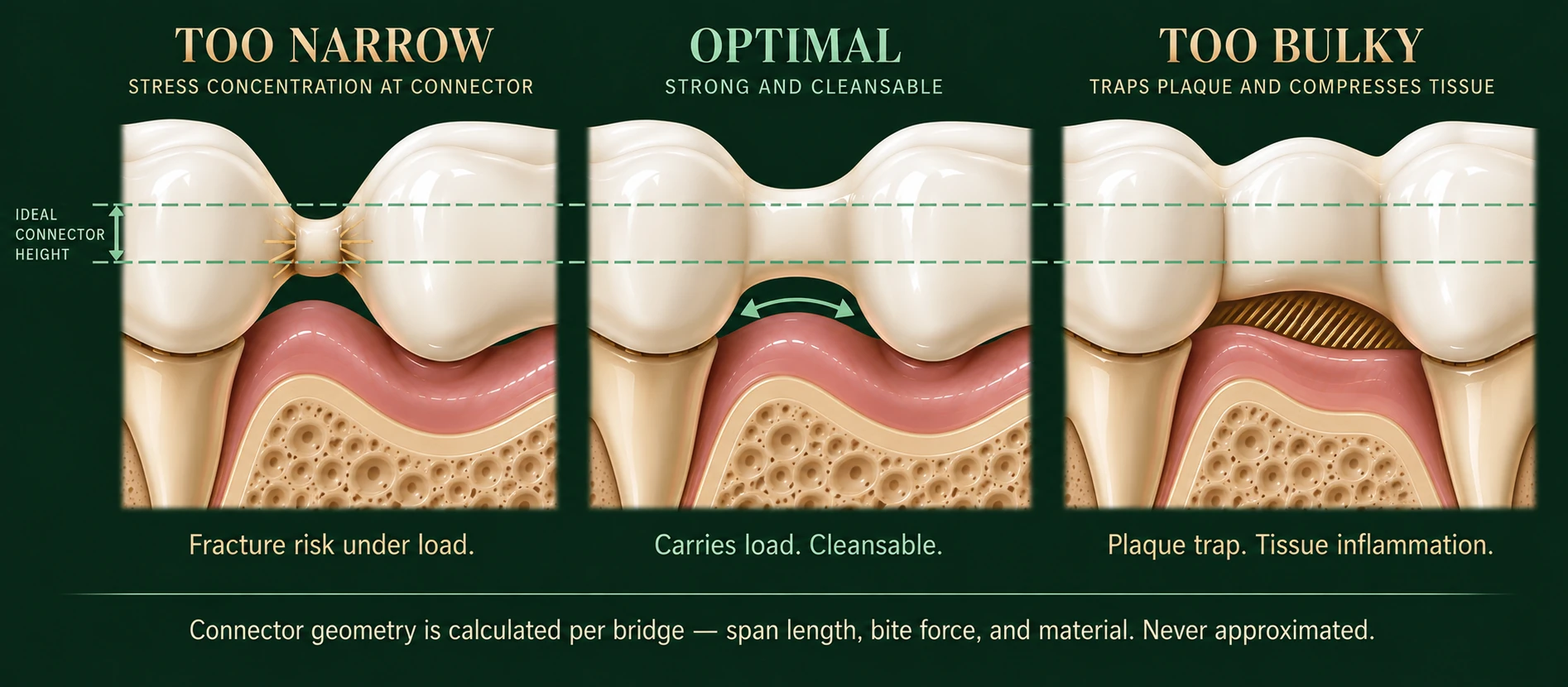
A three-unit fixed bridge spans a gap using two anchor (abutment) teeth. The pontic has no root. Every bite force applied to it transfers entirely through the connectors into the abutment roots. The engineering goal is equal, symmetrical force distribution — so neither root absorbs disproportionate occlusal loading.
The connectors — the points where the pontic joins the abutment crowns — must be wide enough to resist fracture under functional occlusal loading, yet not so bulky that they trap plaque or prevent normal gum tissue contour. This balance is calculated per bridge based on bite force profile, span length, and material. A layered ceramic bridge requires different connector geometry than a monolithic zirconia bridge — never approximated.
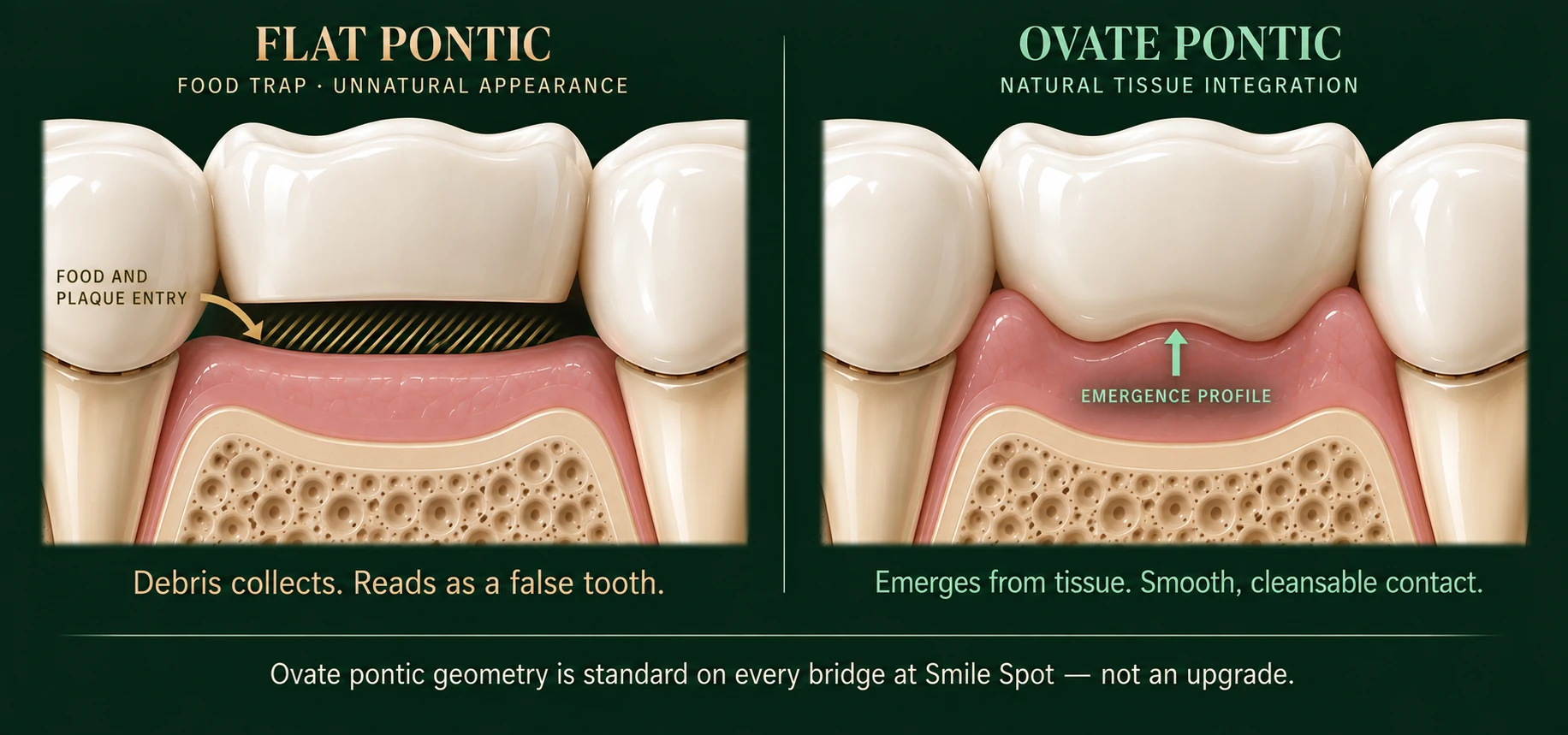
A standard pontic is flat-bottomed — it floats above the gum tissue, leaving a visible gap that collects food debris and looks artificial on close inspection. The ovate pontic is contoured to press gently into the gum, creating an emergence profile that mimics a natural tooth growing directly from the tissue. The result is a bridge that reads as a full, living tooth rather than a replacement. Hygiene under an ovate pontic is also more accessible than a flat design — the tissue contact zone is smooth and rounded, not a ledge that traps plaque. Ovate pontic geometry is our standard design where the tissue allows, not an upgrade.
We select bridge materials based on your bite, the location in your mouth, esthetic goals and long-term plan. At Smile Spot Dentistry in Venice, FL, we use proven, high-quality ceramics that offer strength, beauty and predictable results.
Maximum strength
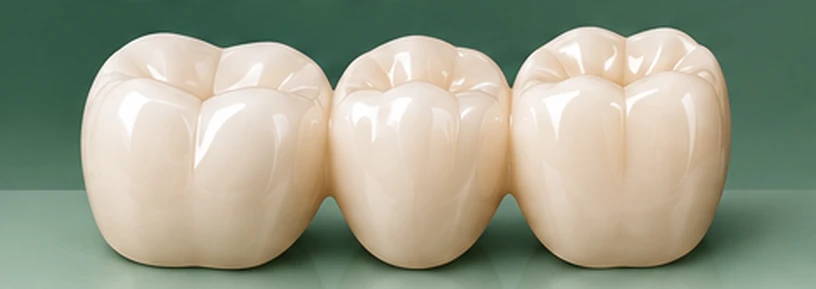
Ideal for back teeth and high bite forces.
Strength and natural beauty
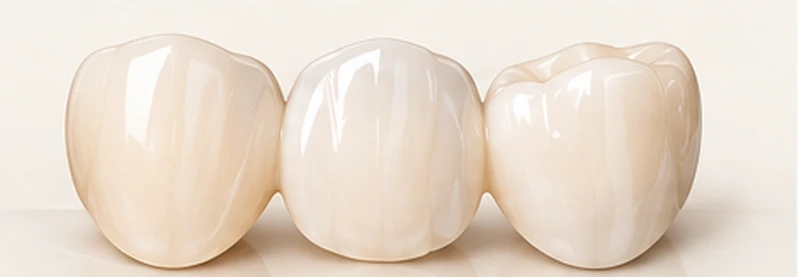
Our most versatile option for anterior or premolar bridges — best suited to shorter spans, typically up to three units in the front of the mouth.
Customized esthetics
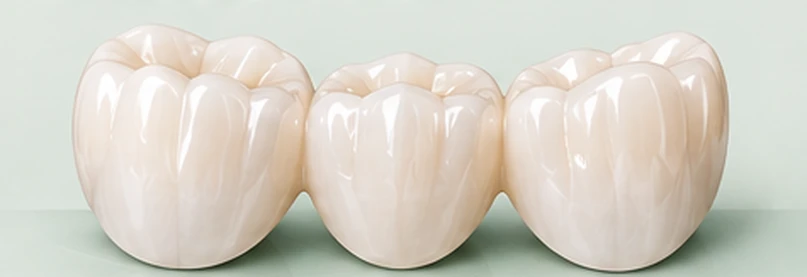
Hand-layered for highly individualized esthetics.
When the right material is matched to the right case — and designed, fitted and maintained properly — dental bridges can provide many years of function, comfort and confidence.
Monolithic zirconia is the material a bridge is made from, not a separate support type: it can be used on prepared teeth or on implants. Metal-free and CAD/CAM milled, it offers high strength and durability, making it well-suited for posterior teeth, high-load situations and longer spans. Designed and milled digitally for a precise fit.
Material Science
Material selection is not cosmetic — it is structural. The ceramic chosen for a bridge must match the bite force, span length, position in the arch, and aesthetic priority of that specific case. There is no universal answer.
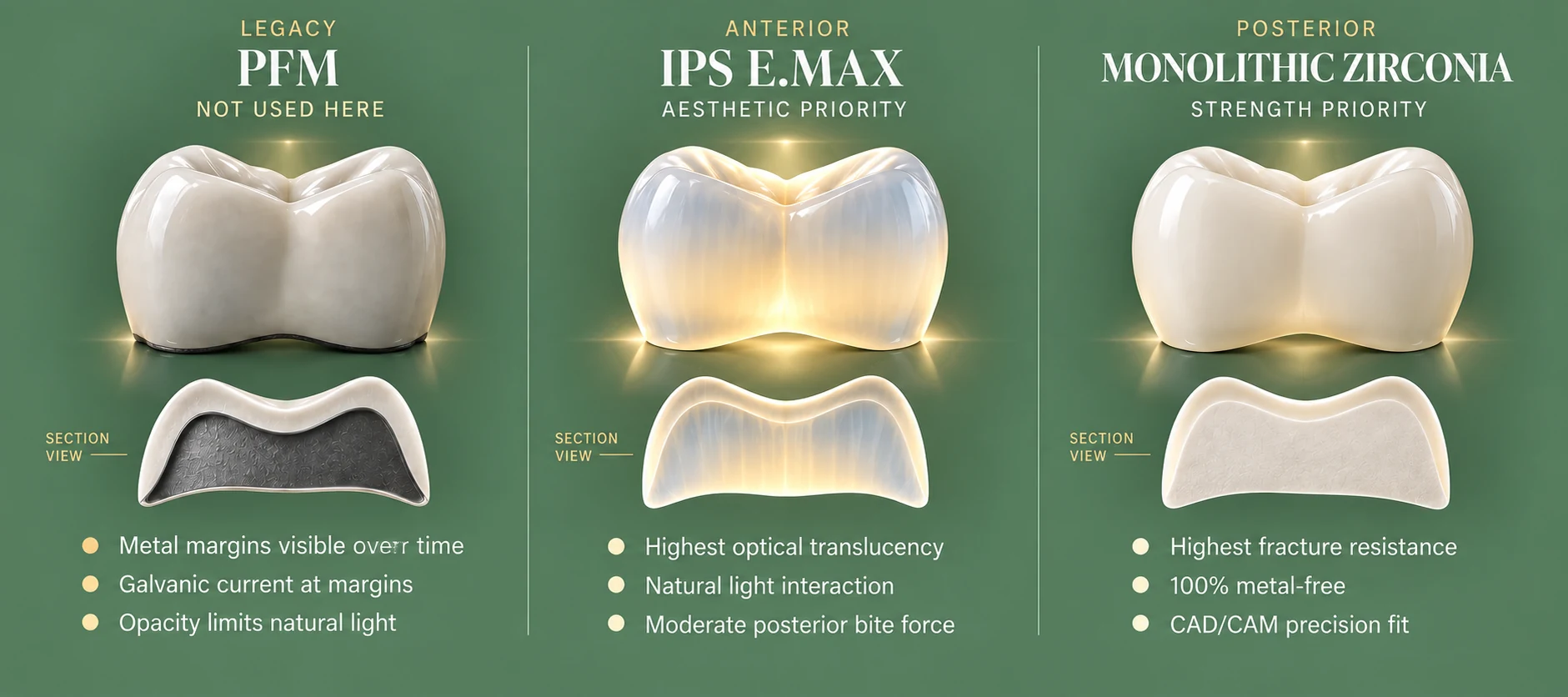
Porcelain fused to metal. Industry standard for decades. The metal substructure develops a visible dark line at the gumline as gums naturally recede over time. Galvanic sensitivity possible. Not used at Smile Spot.
Lithium disilicate ceramic. Maximum translucency and shade gradation — light behaves through it the way it behaves through natural enamel. The preferred material for anterior bridges where the aesthetic result must be indistinguishable from natural teeth.
Full-contour zirconia. No layering, no fracture risk at the porcelain interface. Exceptional resistance to heavy bite forces in the posterior region. CAD/CAM milled from a single block — no metal, no dark margins at the gumline.
Material is selected at consultation based on position, bite force, and aesthetic priority — never by default.
We use digital technology and in-office 3D printing to keep you comfortable, protect your prepared teeth and allow us to refine the design before your final ceramic bridge is fabricated.
We use the iTero intraoral scanner to capture your teeth, bite and surrounding anatomy with high precision.
We print a temporary bridge in-office that protects your prepared teeth and lets us evaluate fit, bite, contour and function while your final bridge is being made.
Your definitive bridge — typically monolithic zirconia or IPS E.max — is fabricated through our trusted dental laboratory. We verify fit, contacts and occlusion before final cementation.
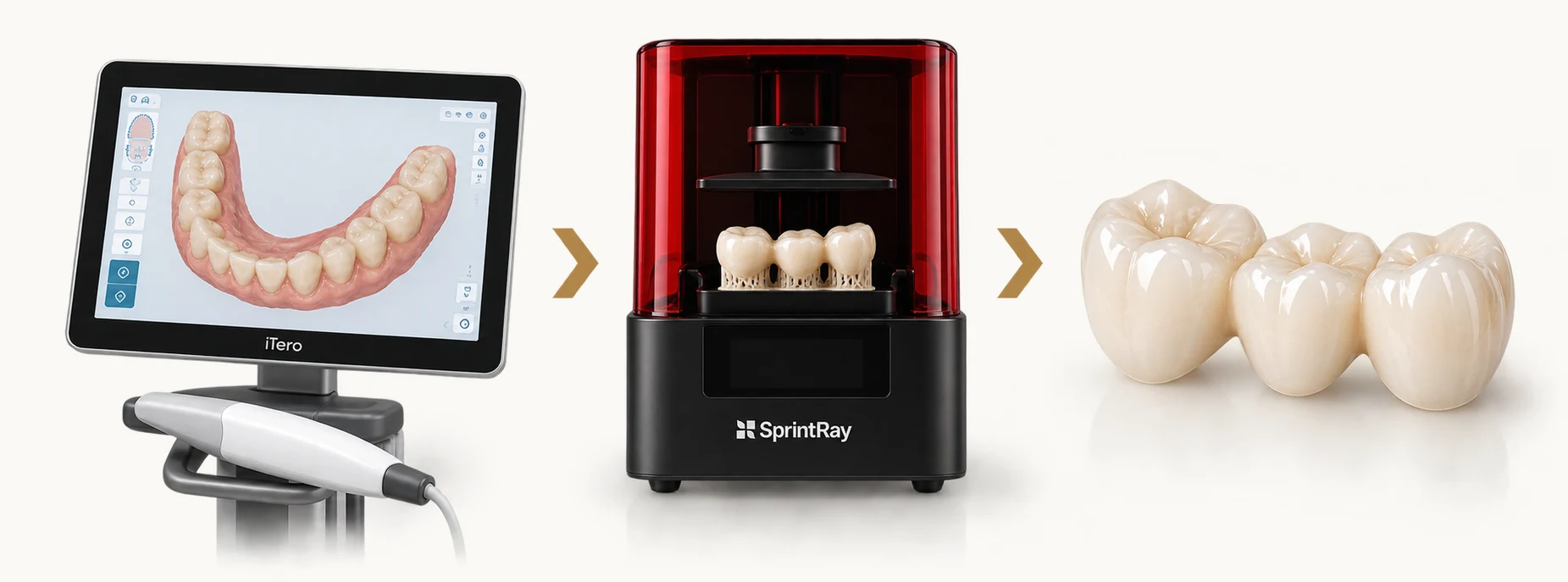
From digital scan to final smile.
Digitally Designed Dental Bridges
It is common to be asked to commit to a permanent ceramic restoration based on an X-ray and a verbal description. Our digital dentistry workflow produces a physical prototype first — you wear it, test the bite, and approve the aesthetics. Only then do we CAD/CAM mill the final zirconia or E.max ceramic.
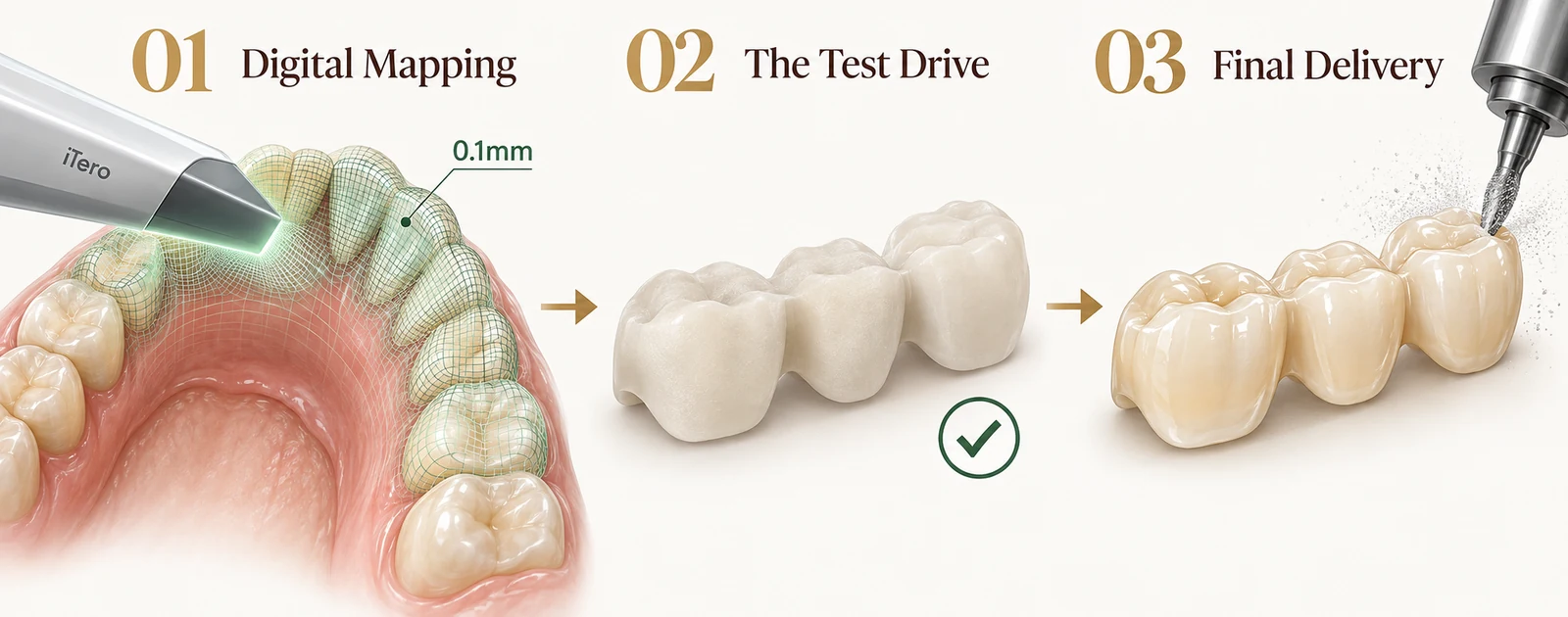
The iTero intraoral scanner captures a highly accurate digital blueprint of your anatomy — every surface, every angle, every neighboring tooth. No putty impression. No distortion in transit to the lab. This digital dentistry foundation drives every downstream CAD/CAM decision for your bridge design.
From the digital scan, we produce a high-density resin prototype of your custom dental bridge in-house. You leave your first appointment wearing it. Live with it. Test the bite. Evaluate the aesthetics in natural light. If anything is off, we adjust the digital file before a single gram of zirconia or E.max is touched.
Once the prototype is approved, the verified file goes to precision CAD/CAM milling. The lifelike dental bridge — monolithic zirconia for posterior occlusal loading, IPS E.max for anterior aesthetics — is fabricated to the exact specifications you already wore and approved. Two appointments total. No surprises at delivery.
$2,500 – $5,000
Typical out-of-pocket range for a three-unit all-ceramic dental bridge.
Your actual cost depends on the number of units, supporting teeth, bridge design, ceramic material and your individual insurance benefits.
Insurance
Many PPO plans provide benefits for major restorative treatment. Coverage, deductibles, waiting periods and annual maximums vary by plan. We verify your specific benefits before treatment.
Financing
CareCredit and Cherry financing are available for eligible patients, with convenient monthly payment plans.
HSA / FSA
HSA and FSA funds may generally be used for qualifying restorative dental treatment. Check with your plan for specific guidelines.
You’ll know the treatment plan and expected cost before your bridge is made.
Our team will review your clinical findings, treatment options and the full cost with you in advance, so there are no surprises.
Quality & Pricing
Not all dental bridges are built the same. The difference in cost reflects the difference in engineering. Here is what separates a basic bridge from one designed for the long term.
| What Drives Quality | Standard Practice | Smile Spot Dentistry |
|---|---|---|
| Impression Method | Putty tray — can distort during setting and transit | iTero digital scan — highly accurate, no impression distortion |
| Bite Analysis | Basic occlusal check at delivery | Kois force mapping before any preparation begins |
| Fit Verification | Visual check at seating — adjusted chairside | Passive fit protocol — seated with minimal internal tension |
| Material | PFM — porcelain over metal core, dark margins over time | Monolithic zirconia or IPS E.max — 100% metal-free |
| Pontic Design | Flat-bottom — visible gap, plaque accumulation | Ovate pontic — mimics natural gum emergence |
| Trial Step | None — permanent restoration from day one | Prototype worn and approved before final ceramic is milled |
Financing available through CareCredit and Cherry — apply in minutes at your consultation. HSA & FSA accepted.
Questions patients ask before replacing a missing tooth at Smile Spot Dentistry in Venice, FL.
A properly engineered, all-ceramic dental bridge often lasts 10–15 years or longer. Bridge durability depends on three factors: occlusal stability analysis (Kois force analysis at planning), passive fit (minimal internal tension at seating), and oral hygiene under the pontic. Bridges that fail early usually do so because one of these three factors was compromised. Our digital fabrication via iTero scan addresses fit. Our Kois analysis addresses force. Your water flosser hygiene under the pontic addresses the third.
Bridge failure usually traces to three causes: asymmetric occlusal loading on the abutment roots (force engineering error), internal tension from poor passive fit at seating (fabrication error), or plaque accumulation under the pontic leading to abutment decay (hygiene failure). Our Kois bite analysis prevents force errors; our CAD/CAM iTero digital workflow is designed to prevent fit errors; and our hygiene education addresses maintenance. These three factors together explain why bridge materials alone don't determine bridge lifespan.
The bridge preparation appointment uses local anesthetic — the procedure itself should be comfortable. Afterward, mild sensitivity on the prepared abutment teeth is normal for a few days and resolves on its own. Because a fixed dental bridge requires no surgery, there is no post-operative healing period, no sutures, and no swelling. You can typically return to normal eating within 24–48 hours wearing your prototype bridge. There is no difficulty chewing during the interim period.
A conventional (tooth-supported or crown-supported) dental bridge anchors to prepared crowns on adjacent natural teeth. An implant bridge — whether a two-implant supported span or a full arch implant bridge — anchors to surgically placed titanium implant posts in the jawbone, with no adjacent natural teeth involved. The conventional bridge avoids surgery but transfers bite force through the abutment roots. The implant bridge preserves bone, involves no natural tooth preparation, and delivers superior implant biomechanics — but requires surgery and a 3–6 month healing timeline.
A three-unit all-ceramic dental bridge at our Venice practice typically costs $2,500–$5,000 out-of-pocket after most PPO dental insurance (which covers approximately 50% of major restorative work). Exact cost depends on material — zirconia bridge vs. IPS E.max — and your insurance plan's maximum benefit. We verify your benefits before treatment and give you clear numbers in writing. CareCredit and Cherry financing cover any remaining balance with monthly payment options.
A metal-free dental bridge — also called an all-ceramic bridge or porcelain dental bridge — uses ceramic materials exclusively with no metal substructure: monolithic zirconia for posterior strength or IPS E.max for anterior aesthetics. This eliminates the dark grey line at the gum margin that appears in older porcelain-fused-to-metal (PFM) bridges as gums recede over time, removes concerns about metal sensitivity or galvanic reaction at the margins, and delivers superior esthetic bridge dentistry results. Every bridge at Smile Spot Dentistry is 100% metal-free.
Most PPO dental insurance plans classify bridges as a major restorative procedure and cover approximately 50% after your deductible — typically after a waiting period of 6–12 months for new policyholders. This often makes a dental bridge one of the more insurance-friendly permanent tooth replacement options. We verify your benefits and provide exact numbers before your consultation. CareCredit and Cherry financing plans are available for any remaining balance.
A bridge replaces a tooth that’s missing. A crown restores one that’s still there.
If your tooth is cracked, heavily restored or weakened but can still be preserved, a dental crown may be the more appropriate restorative path.
Explore dental crownsIf you have a damaged, cracked, or post-root-canal tooth that still has its root, you're in crown territory, not bridge territory. Our Crowns page covers the full clinical detail — Kois margins, material science, and the 50% structural threshold for when a crown is appropriate versus when extraction and bridge or implant replacement is necessary.
Schedule a consultation with Dr. Sellappan to find out if a dental bridge is the right solution for your smile, your bite and your long-term health.
Schedule your dental bridge consultation at Smile Spot Dentistry — Venice Island's boutique restorative dentistry studio at 273 S Tamiami Trail. Dr. Sellappan reviews your X-rays, assesses bone volume, evaluates adjacent teeth, and gives you a clear recommendation — fixed bridge, implant, or a different path entirely. CareCredit and Cherry financing available. Benefits verified before you commit to anything.