


Bite Therapy & TMJ Treatment — Venice, Florida
The Foundation of Function.
Before any restoration is placed, before any tooth is moved, the jaw must be at peace with itself. Dr. Sellappan uses the Kois Deprogrammer protocol to find your bite’s true anatomic home — and build every treatment from there.
When the Bite Is the Diagnosis — The symptoms may
show up somewhere else.
An imbalanced bite can affect more than just your teeth. It can create tension in the jaw joints and facial muscles, leading to symptoms throughout the head and neck. We look at the whole system — not just the teeth — to find the real cause.
Jaw discomfort
Morning jaw pain or stiffness, clicking, popping, limited opening.
Headaches &
facial tensionHeadaches at the temples and tension in the jaw and facial muscles.
Tooth wear
or fracturesWorn enamel, repeated crown or veneer fractures, abfractions (notching at the gumline).
Clenching
& grindingBruxism and grinding during sleep, often without realizing it.
A bite that
feels “off”Your bite feels different before and after waking or doesn’t feel stable in everyday life.
Why Occlusal Disease Goes Undiagnosed
Many bite problems are missed because the symptoms don’t always show up in the teeth. Learn how occlusal disease, habitual position, and compensatory muscles can hide the real cause — and the signs to watch for.
Occlusal problems rarely announce themselves clearly. They show up as headaches. As worn enamel no previous dentist could explain. As a crown that keeps breaking, or a jaw that clicks when you open wide. As teeth that feel “off” no matter how many adjustments are made.
These are not isolated symptoms. They are the downstream consequences of a bite that has never been in its correct position — and a muscular system that has been compensating for years, sometimes decades.
The jaw’s compensatory muscles are remarkably adaptive. Over time they build a new normal — a habitual position that feels correct because it has always been there. Standard dental examinations assess teeth at this habitual position. The Kois protocol goes deeper: it assesses where the jaw actually wants to be, independent of where the muscles have learned to hold it.
Signs that occlusion may be involved
- Morning jaw pain, tension, or stiffness
- Unexplained headaches, especially at the temples
- Jaw clicking, popping, or limited opening
- Tooth wear progressing faster than expected
- Repeated crown or veneer fractures
- Notching at the gumline (abfractions)
- Awareness of grinding or clenching during sleep
- Bite that feels different before and after waking
By identifying the source of your symptoms, we can create a personalized bite therapy plan to restore balance, relieve discomfort, and protect your long-term oral health.
The Kois Deprogrammer: Resetting the System — Before we change
the bite, we find its
true starting point.
The Kois Deprogrammer is a small, smooth acrylic appliance worn for a short period of time to gently relax the jaw muscles, remove the influence of the habitual bite, and help the jaw settle into a reproducible position (centric relation). This gives us a stable starting point for an accurate diagnosis and a predictable treatment plan.
Learn more about the Kois approach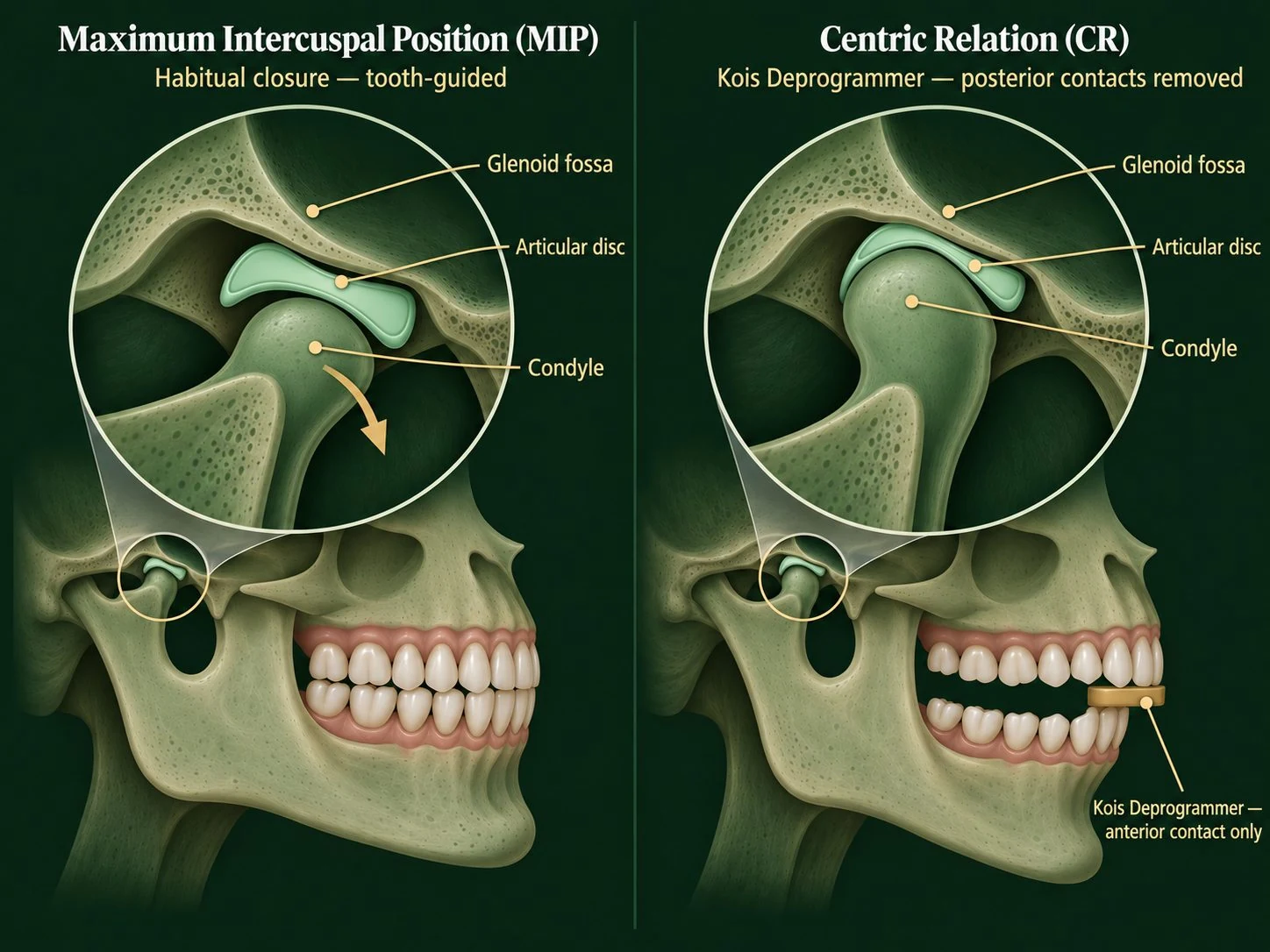
- 01
Remove muscle memory
The appliance takes the teeth out of the equation so the jaw muscles can relax and the habitual bite is no longer influencing the jaw position.
- 02
Find a stable jaw position
With reduced muscle activity, the jaw can settle into a reproducible position (centric relation).
- 03
Plan with confidence
We use this position to evaluate your bite, joints, and function — and design a conservative, long-term solution.
How the Deprogrammer resets the system
When a bite has been misaligned for years, the muscles that control jaw movement adapt. They develop a new “normal” — a learned compensatory position that feels correct because it has always been there. The Kois Deprogrammer exists to break that pattern.
What the Deprogrammer Does
The Kois Deprogrammer is a small, removable appliance that rests on the anterior teeth, allowing only the lower front teeth to contact it. By eliminating all posterior tooth contact, it removes the bite signals the muscles have been using to find their habitual position. Within days to weeks, the muscles relax — and the jaw finds its true anatomic home: Centric Relation.
Why Centric Relation Matters
Centric relation is the only reproducible, stable jaw position that is independent of tooth contact. Every restoration, orthodontic movement, or occlusal adjustment planned from any other reference point risks being built on a compensatory position that the body will eventually reject. At Smile Spot in Venice, Florida, centric relation is the zero point — the reference from which everything else is measured.
“The Deprogrammer doesn’t treat the bite. It reveals it. Once we know where the jaw actually wants to be, we can plan treatment that works with the system — not against it.”
Accurate diagnosis. A healthier bite. A brighter tomorrow.
Bite Therapy in Venice, FL: The Five-Step Protocol — From diagnosis to a stable,
comfortable bite.
We follow a proven, step-by-step approach based on the Kois philosophy to identify the cause, retrain the system, and create a long-term solution for a healthier, more comfortable bite. Bite therapy at Smile Spot is a structured diagnostic and treatment process — not a symptom-management protocol.
- 01
Comprehensive
EvaluationWe review your symptoms, examine your bite contacts, jaw range of motion, joints and muscles, and take digital records — including in-house CBCT imaging for complex cases — to find the true cause.
- 02
Muscle
DeprogrammingYou wear a Kois Deprogrammer, fabricated from an iTero digital scan and worn primarily overnight for two to eight weeks, to relax the jaw muscles and let the jaw settle into centric relation.
- 03
Precise Analysis
and PlanningWe record the true centric relation position — the permanent reference point for all treatment — analyze your bite with the Kois protocol, and design a plan focused on function, stability, and aesthetics.
- 04
Treatment
and TransitionWe use conservative, precise treatment — which may include orthodontics, occlusal adjustment, or restorative dentistry — so every crown, bridge, or veneer functions correctly at the jaw’s true home.
- 05
Long-Term
MaintenanceWe monitor your results, fabricate a precision nightguard from your centric relation record when needed — a clinically designed orthotic, not a stock bite guard — and make periodic adjustments.
The Five-Step Protocol in clinical detail
Every step builds toward a stable, verifiable centric relation record that anchors all subsequent treatment.
01 Comprehensive Bite Assessment
A full evaluation of current bite contacts, jaw range of motion, muscle palpation, and joint sounds. We document where the bite currently lands. In-house CBCT imaging is ordered for complex cases to evaluate condylar position and joint anatomy in 3D.
02 Kois Deprogrammer Delivery
The Deprogrammer is fabricated from an iTero digital scan and delivered at a short follow-up appointment. Worn primarily overnight for two to eight weeks — the time required for the musculature to fully decompress.
03 Centric Relation Record
Once the musculature is fully decompressed, we record the true centric relation position. This becomes the permanent reference point for all subsequent treatment planning — whether orthotic, restoration, or comprehensive reconstruction.
04 Treatment Planning in Centric Relation
With centric relation established, Dr. Sellappan builds the treatment plan from the correct anatomic position. Every crown, bridge, or veneer is designed to function correctly at the jaw’s true home.
05 Orthotic or Nightguard Fabrication
For patients with bruxism or ongoing occlusal stress, a precision nightguard is fabricated from the centric relation record using an iTero digital scan — a clinically-designed occlusal orthotic, not a stock bite guard.
A healthier bite.
A brighter tomorrow.
By treating the cause — not just the symptoms — we help you find lasting relief, protect your teeth and joints, and enjoy a more comfortable, confident smile.
Same-day 3D imaging.
A clearer diagnosis.
A better plan.
In-House CBCT: Seeing the Whole System — Seeing the whole system.
What we can’t see clinically, we can see in 3D.
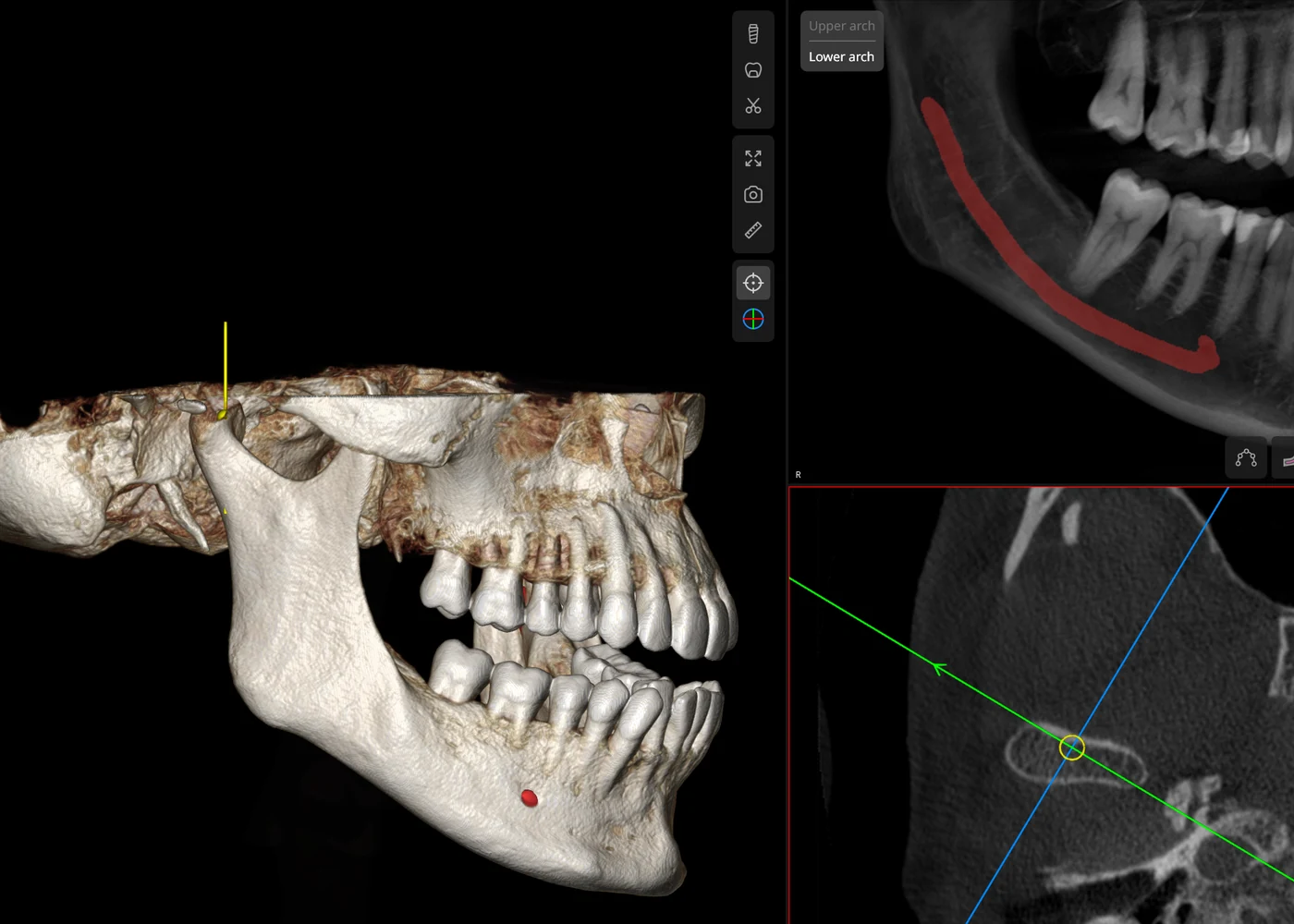
Our in-house CBCT gives us a complete view of your teeth, jaw joints, bone and surrounding anatomy — so we can find the real cause of your symptoms and design a precise, long-term solution.
- Jaw joints (TMJs)Evaluate joint health, condylar position, joint space and symmetry.
- Bone and rootsSee bone volume, root position and anatomy in 3D.
- Airway and anatomyVisualize airway space and surrounding structures.
- Bite relationshipSee how your upper and lower teeth fit together.
3D bite analysis — what 2D imaging misses
What 2D Imaging Misses
A standard panoramic X-ray cannot reliably show condylar position, joint space, or the 3D relationship between the condyle and glenoid fossa — the structures most relevant to TMJ treatment planning.
What CBCT Adds
In-house 3D CBCT imaging at Smile Spot allows Dr. Sellappan to evaluate condylar morphology, joint space symmetry, and the anatomical boundaries of tooth movement before any treatment is designed. Most GP dental offices in Venice and Sarasota refer this imaging out. At Smile Spot, it is available in-house.
Advanced diagnostics. A more complete answer. A healthier you.
The Biomechanics — Centric Relation:
The Zero Point
Your jaw can close in two different positions. The first is your habitual bite — where your teeth guide your jaw every time you close. The second is centric relation — where your jaw joints naturally sit when the muscles are fully relaxed. Centric relation is the reference point we build every treatment from.
- 01
Your habitual bite: where your teeth make you bite
Over the years your muscles learn to steer your jaw to wherever the teeth fit together best. That learned position is your habitual bite. It feels normal — but it’s a habit, not necessarily where your joints are comfortable. (Dentists call this maximum intercuspation, or MIP.)
- 02
Centric relation: where your joints want to be
When the muscles fully relax — for example after wearing the Kois Deprogrammer — the jaw joint settles into its most stable, supported position. This is centric relation — and unlike your habitual bite, it can be found again reliably every time.
- 03
Why the gap matters
If your habitual bite and centric relation don’t line up, your jaw slides between them every time you close. That small slide puts repeated stress on teeth, crowns and joints — and it’s often behind chipped veneers, cracked crowns and jaw pain no one could explain. (This is called the CR-MIP slide.)
“Centric relation is the only jaw position that cannot be faked by the muscles. It belongs to anatomy, not habit.”
The clinical detail
The Condyle-Disc Assembly
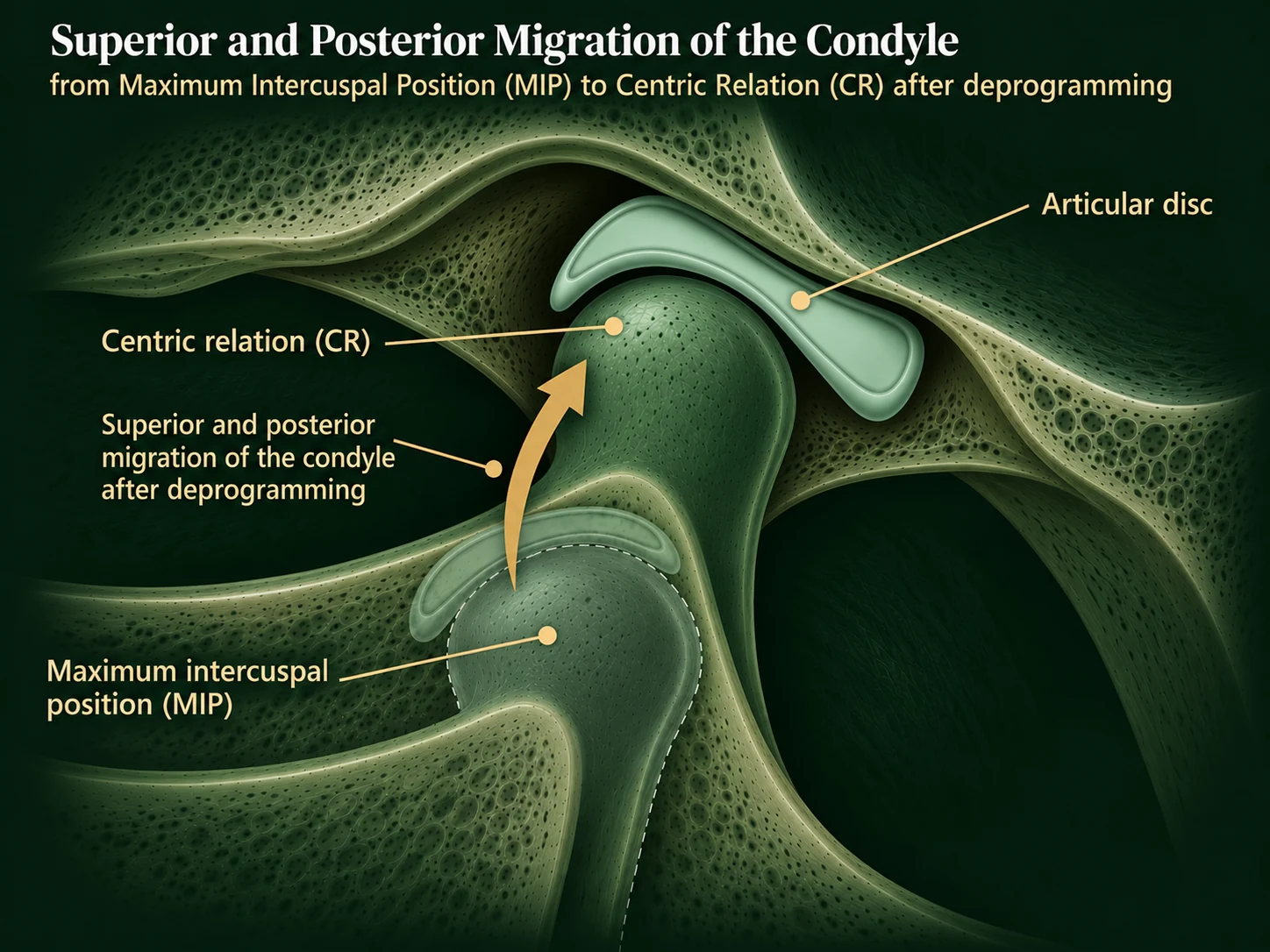
The condyle-disc assembly is what defines centric relation — the condyle fully seated in the glenoid fossa — superiorly and anteriorly positioned, with the articular disc properly interposed. This is the only position where the joint is in its most stable, most supported configuration.
Adapted Centric Posture vs. Centric Relation
Most patients present in Adapted Centric Posture — a learned jaw position shaped by years of tooth contacts and muscular compensation. This position feels normal. It is not the same as centric relation. The gap between these two positions — measured in tenths of a millimetre — is the source of most occlusal disease.
The CR-MIP Slide
In most patients, centric relation and maximum intercuspation are not the same position. The distance the jaw travels between them is the CR-MIP slide. A large slide means restorations planned in maximum intercuspation will be stressed every time the jaw closes in centric relation — the mechanical root of most unexplained fractures.
Why Muscles Lie
The lateral pterygoid, masseter, and temporalis muscles adapt continuously to the occlusal environment. Ask a patient to bite down and they guide their jaw to their habitual position — not centric relation. The Kois Deprogrammer removes the landmarks these muscles use. What remains is centric relation.
The Clinical Foundation — Why Bite Stability Comes
Before Everything Else
Every restoration has a relationship with the bite. Bite correction must come before restoration. A crown placed on a bite that is not in centric relation will contact incorrectly — producing stress that fractures the porcelain, loosens the cement, or migrates the underlying tooth over time.
Our bite therapy approach- Veneerschip on an unstable bite
- Implantscannot remodel under stress
- Invisalignmuscles resist the new position
“The bite is not a detail. It is the foundation. Everything built on an unstable bite is built on borrowed time.”
Bite-first planning for veneers, implants & Invisalign
Before Veneers in Cosmetic Dentistry
Porcelain veneers placed on a mouth with unresolved occlusal disease will chip at the incisal edges. Dr. Sellappan’s Kois-trained protocol means every cosmetic case begins with bite assessment — veneers at Smile Spot are planned in centric relation.
Before Implants in Restorative Dentistry
Implants cannot remodel under occlusal stress the way natural teeth can. Bite therapy before implant restoration ensures the implant is loaded correctly — aligned with the jaw’s true function.
Before Invisalign
Clear aligner therapy moves teeth to new positions. If planned against a compensatory bite rather than centric relation, the teeth will be moved to a location the jaw’s musculature will resist. Bite-first planning is why Invisalign results at Smile Spot are stable.
Bruxism & Occlusal Protection — Protecting the Investment:
Precision Nightguards
Bruxism — chronic teeth grinding and clenching — is one of the most destructive forces in dentistry. Left unmanaged, it fractures crowns, wears natural enamel, strains the TMJ, and undoes restorative work — including implant restorations. At Smile Spot, every nightguard is fabricated from your centric relation record and scanned with iTero — fundamentally different from an over-the-counter bite guard.
“A custom nightguard doesn’t just protect your teeth — it protects everything we’ve built together.”
Diagnostic orthotic
Kois Deprogrammer
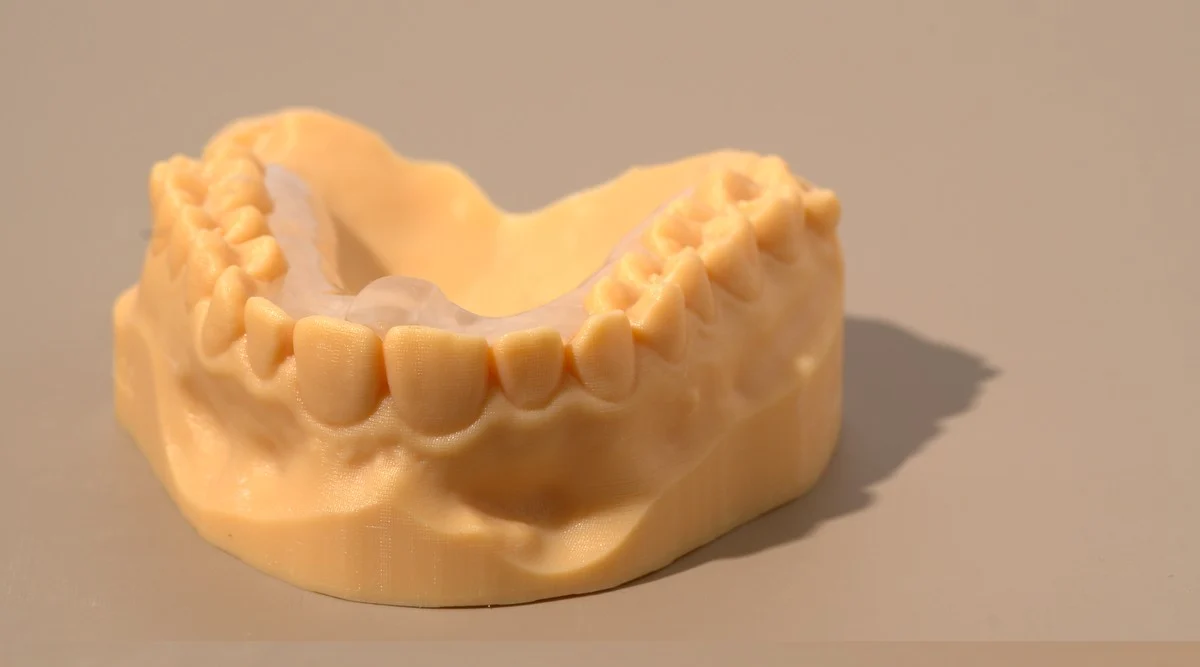
A small appliance worn over the front teeth, mainly overnight, for two to eight weeks. It lets the jaw muscles relax so Dr. Sellappan can find your true bite position before any treatment is planned.
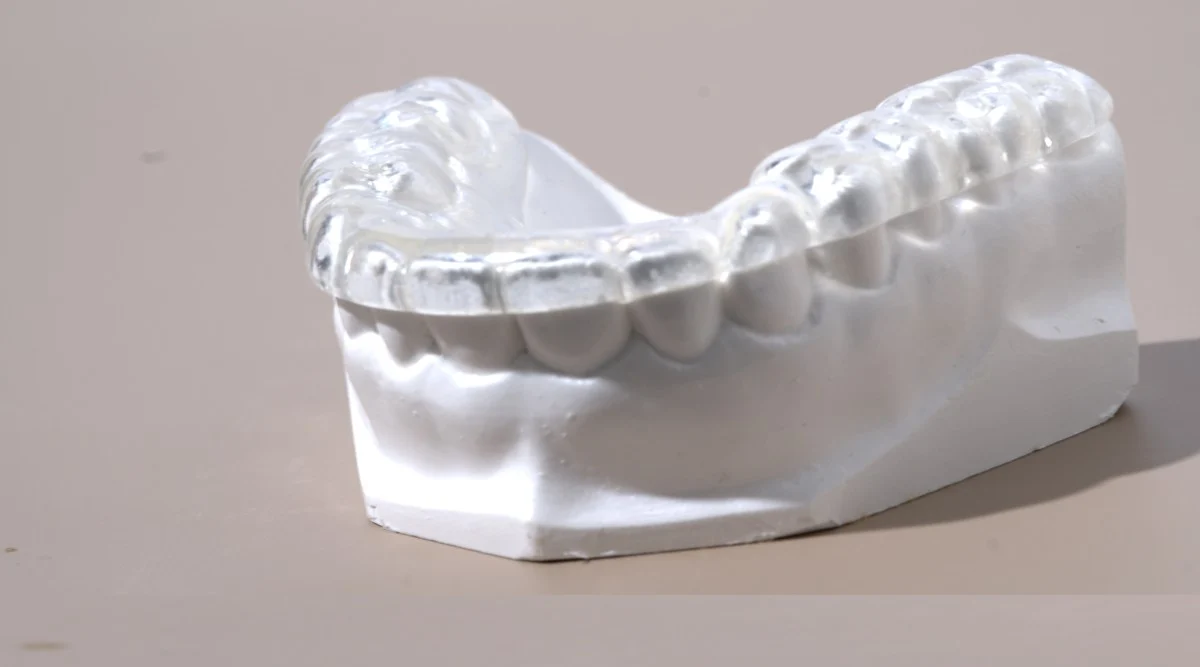
Long-term protection
Custom Nightguard
Made from your iTero digital scan for a precise fit. Worn at night, it protects your teeth, crowns, veneers and implants from clenching and grinding.
Frequently Asked Questions — Bite Therapy & TMJ in Venice, FL
Answers to common questions about bite therapy, the Kois Deprogrammer, TMJ, and how bite stability supports long-term dental health.
Bite therapy is a clinical approach to diagnosing and treating occlusal disease. At Smile Spot in Venice, Florida, it begins with the Kois Deprogrammer protocol to find centric relation, then addresses the source of symptoms including TMJ pain, bruxism, headaches, and worn or fractured teeth.
A small removable appliance that rests on the anterior teeth, eliminating all posterior tooth contact. This removes the bite signals muscles use to find their habitual position, allowing them to decompress so the jaw can find its true anatomic home — centric relation.
Yes. Occlusal disease is a common and frequently overlooked cause of chronic headaches, particularly at the temples. When the bite is not in its correct anatomic position, the muscles of mastication compensate continuously — generating tension that radiates as headaches, neck stiffness, and jaw fatigue.
TMJ refers to the temporomandibular joint connecting the jaw to the skull. TMD describes dysfunction of this joint, typically presenting as jaw pain, clicking, limited opening, or locking. Treatment at Smile Spot begins with a Kois occlusal assessment to determine whether symptoms are muscular, joint-based, or structural.
In many cases, yes. Placing restorations on a bite that has not been assessed and stabilised risks premature failure — fractures, wear, and repeated breakage. Bite stability is confirmed before any restoration is placed at Smile Spot Dentistry.
The Kois Deprogrammer is typically worn for two to eight weeks — the time required for the jaw musculature to fully decompress and centric relation to become reliably accessible. Total duration depends on whether restorative or orthodontic treatment follows.
Centric relation is the true anatomic home of the jaw — the position where the condyles are fully seated in the glenoid fossa with the disc properly interposed. It is a reproducible, stable reference point independent of tooth contact. All treatment planning at Smile Spot is referenced to centric relation.
Coverage varies by plan. Some dental insurance plans cover nightguard fabrication or diagnostic appliances. Medical insurance may cover TMJ-related treatment. FSA and HSA funds are eligible. Our team reviews your benefits before treatment begins.
Sources & Clinical References
- 1Kois Center. Curriculum Overview: Occlusal Disease, Bite Analysis, and the Kois Deprogrammer Protocol. koiscenter.com
- 2American Academy of Orofacial Pain. Guidelines for Assessment, Diagnosis, and Management of Orofacial Pain. 5th ed.
- 3Dawson, P.E. Functional Occlusion: From TMJ to Smile Design. Mosby, 2007.
- 4National Institute of Dental and Craniofacial Research. TMJ Disorders. nidcr.nih.gov
Our Location — Bite Therapy in
Venice, Florida
Conveniently located on Venice Island, we welcome patients from Venice, Nokomis, Osprey and throughout Sarasota County seeking expert care for TMJ, bite problems and comprehensive dental health.
- Smile Spot Dentistry273 S Tamiami Trail
Venice, FL 34285 - Call Us(941) 477-1977
- Request an AppointmentWe’ll help you find a time that works for you.
Take the next step — Your bite should feel
as good as your smile looks.
Find lasting relief and protect your long-term dental health with a personalized bite evaluation from Dr. Meenachi Sellappan.